
A 15–20 Year Financial Breakdown for Homeowners | The Cost of Maintaining Natural Grass Arizona | Water Usage: The Largest Cost Factor | Lawn Maintenance Costs Over Time | Artificial Turf Installation as a Long-Term Investment | A Simplified 15–20 Year Financial Comparison | Water Savings Over the Life of the Landscape | Reduced Maintenance Time | Long-Term Landscape Performance | Artificial Turf and Property Appeal | The Investment Mindset | Artificial Turf in the Southern Arizona Climate | A Long-Term Approach to Landscape Planning | Exploring Artificial Turf Options throughout Tucson and Southern Arizona


A 15–20 Year Financial Breakdown for Southern Arizona Homeowners
Why Artificial Turf Should Be Evaluated as an Investment
When homeowners begin researching artificial turf, the conversation often starts with a simple question:
“How much does artificial turf cost per square foot?”
While installation cost is important, it only tells a small part of the story.
Artificial turf is not just a landscaping product - it is a long-term landscape investment designed to reduce ongoing maintenance costs while providing a consistently attractive outdoor environment.
In Southern Arizona, where water usage, heat, and lawn maintenance demands can make natural grass difficult to sustain, many homeowners are discovering that artificial turf often makes the most financial sense when evaluated over a 15–20 year period.
This guide breaks down the long-term financial impact of artificial turf compared to natural grass so homeowners can better understand the true return on investment.
The Cost of Maintaining Natural Grass in Southern Arizona
Natural grass lawns require continuous care in order to survive in the desert climate. Typical ongoing lawn costs include:
- Water for irrigation
- Mowing and maintenance
- Fertilizer and soil treatments
- Weed control
- Seasonal lawn repairs or reseeding
These costs accumulate every year. Over time, they can represent a significant long-term expense for homeowners.
Water Usage: The Largest Cost Factor
In the Arizona desert climate, water is often the single largest expense associated with maintaining a traditional lawn.
Many grass lawns require frequent irrigation during the warmer months in order to remain healthy.
Artificial turf eliminates the need for irrigation to sustain the lawn, allowing homeowners to significantly reduce water usage while still maintaining a green landscape year-round.
For many homeowners, this reduction in water usage becomes one of the most noticeable long-term financial benefits.
Lawn Maintenance Costs Over Time
Maintaining a natural lawn typically requires either:
- Regular homeowner labor
or
- Hiring a landscaping service
Typical maintenance activities include:
- Weekly mowing
- Edge trimming
- Fertilization
- Seasonal lawn repairs
Over a 15–20 year period, these services can add up to a substantial total cost. Artificial turf eliminates most of these ongoing tasks, replacing them with only minimal periodic maintenance.
Artificial Turf Installation as a Long-Term Investment
Artificial turf installation represents an upfront landscape investment rather than a recurring maintenance expense. Once installed, artificial turf provides:
- A consistent green lawn year-round
- Reduced irrigation requirements
- Minimal maintenance needs
- Long-term durability
Because most ongoing lawn expenses are eliminated or greatly reduced, many homeowners begin to see financial benefits accumulate over time.
A Simplified 15–20 Year Financial Comparison
While exact numbers vary depending on property size and landscape conditions, the long-term comparison often looks something like this:
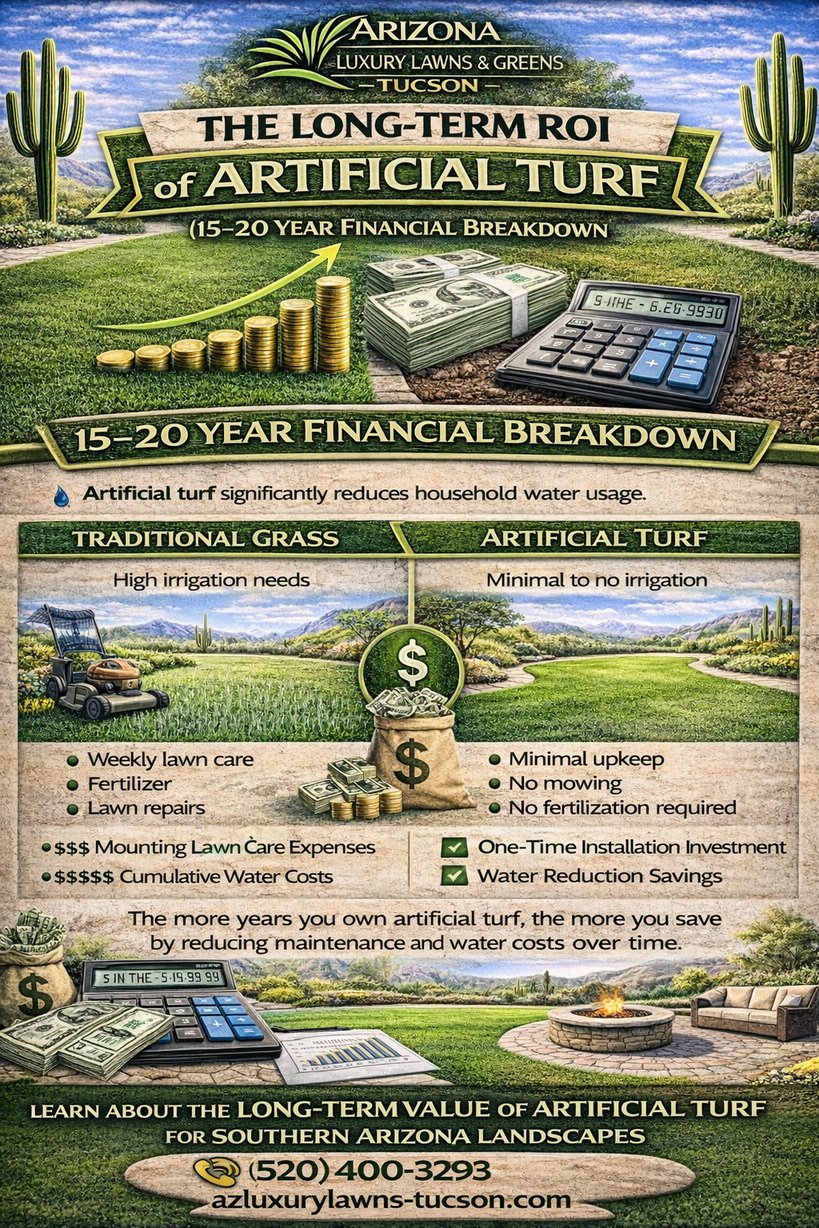
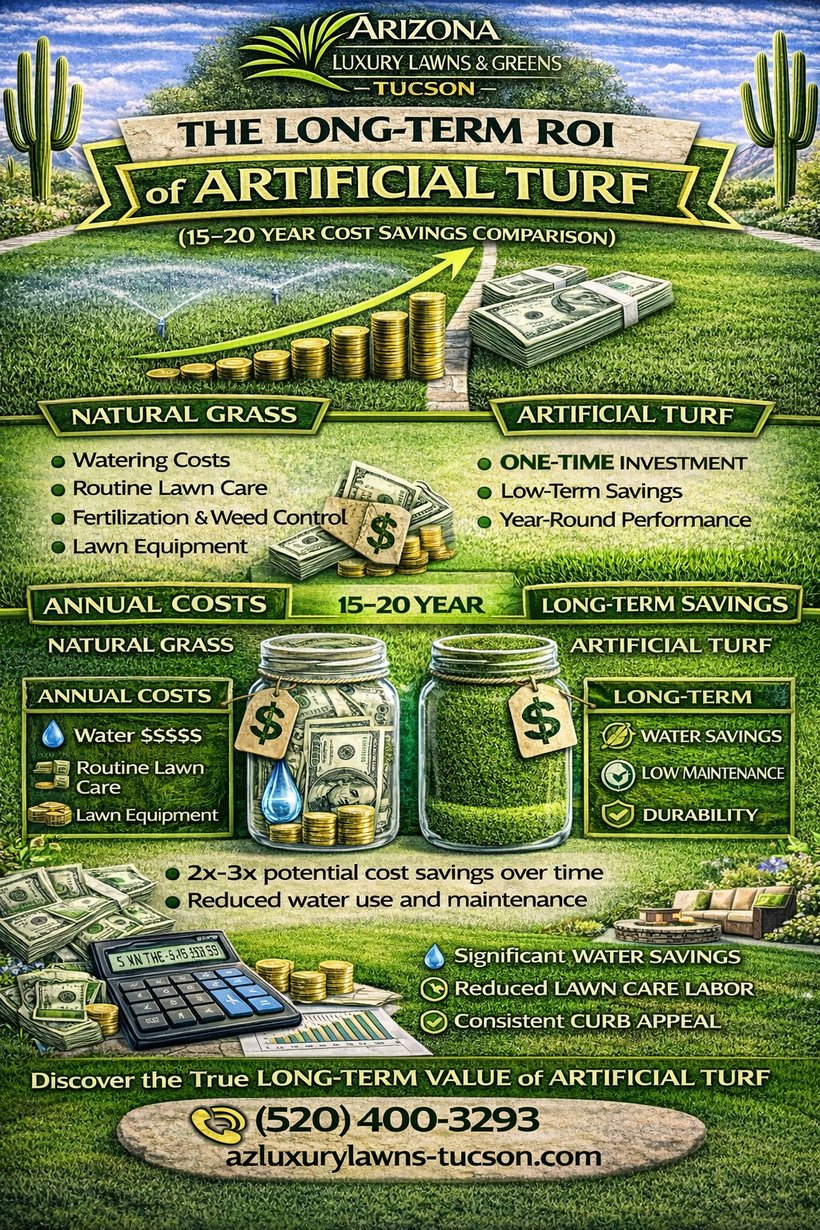
Natural Grass (15–20 Years)
Typical long-term costs may include:
- Water expenses
- Lawn care services or equipment
- Fertilizers and soil treatments
- Lawn repairs and reseeding
Over two decades, these recurring costs can represent a significant cumulative investment in maintaining a traditional lawn.
Artificial Turf (15–20 Years)
Artificial turf typically includes:
- One-time installation investment
- Minimal periodic maintenance
- No irrigation required for lawn survival
- No mowing or fertilization
Because ongoing maintenance costs are dramatically reduced, the long-term cost structure becomes far more predictable.
Water Savings Over the Life of the Landscape
Many homeowners in Tucson and throughout Southern Arizona are becoming increasingly aware of water conservation. Artificial turf landscapes eliminate the need for routine irrigation, which helps reduce household water usage. Over the lifespan of a landscape, this can represent a meaningful reduction in total water consumption. For homeowners focused on sustainability and responsible water use, artificial turf provides a practical alternative.
Reduced Maintenance Time
Financial savings are not the only consideration. Artificial turf also saves time. Instead of spending weekends mowing, edging, and repairing grass lawns, homeowners can spend more time enjoying their outdoor spaces. For many families, this lifestyle benefit is one of the most valuable aspects of artificial turf.
Long-Term Landscape Performance
Another factor often overlooked in cost comparisons is consistency of appearance. Natural lawns can experience seasonal stress due to:
- Heat
- Water restrictions
- Heavy foot traffic
Artificial turf provides a landscape surface designed to remain consistent in appearance regardless of seasonal conditions.
This reliability helps homeowners maintain a polished outdoor environment year-round.
Artificial Turf and Property Appeal
Well-designed outdoor spaces contribute to the overall appeal of a property. Artificial turf landscapes often create:
- Clean visual contrast with desert plants
- Inviting outdoor living areas
- Low-maintenance recreational spaces
These features can enhance the usability and enjoyment of outdoor environments.
The Investment Mindset
When evaluating artificial turf, it can be helpful to shift the perspective from “cost per square foot” to “long-term landscape value.” Artificial turf offers:
- Reduced water consumption
- Lower maintenance requirements
- Consistent landscape appearance
- Predictable long-term costs
Over time, these factors contribute to the overall return on investment.
Artificial Turf in the Southern Arizona Climate
The desert climate presents unique challenges for traditional lawns. Extreme summer temperatures and water usage concerns often make natural grass difficult to maintain. Artificial turf systems designed for Southern Arizona conditions provide a landscape alternative that can perform well in this environment while supporting water-conscious landscaping.
A Long-Term Approach to Landscape Planning
Every property and landscape design is different. For some homeowners, artificial turf becomes an attractive option because it offers a balance of:
- Visual appeal
- Durability
- Water efficiency
- Reduced maintenance
Evaluating these benefits over a 15–20-year horizon helps provide a clearer understanding of the potential long-term value.
Exploring Artificial Turf Options throughout Tucson and Southern Arizona
Artificial turf continues to grow in popularity among homeowners across Tucson, Oro Valley, Marana, Sahuarita, Green Valley, Amado, Casa Grande, Florence, Eloy, Arizona City, Red Rock, Tubac, Rio Rico, Sierra Vista, Huachuca City, Benson, Vail, Corona de Tucson, Oracle, San Manuel, and surrounding communities.
As water conservation and low-maintenance landscaping become increasingly important, many homeowners are exploring how artificial turf may fit into their long-term landscape plans.
Understanding the financial considerations, maintenance benefits, and performance characteristics can help homeowners make more informed decisions about their outdoor environments.