


Why Proper Installation Is the Foundation of Every Turf Project
Why Installation Standards Matter More Than Turf Itself
When homeowners in Tucson, Oro Valley, Marana, Sahuarita, Green Valley, Casa Grande, Florence, Eloy, Arizona City, Red Rock, and Tubac begin exploring artificial turf, most focus on the turf product itself. But the truth is this:
The success of an artificial turf project is determined far more by installation standards than by the turf product alone.
Artificial turf is not simply rolled out like carpet. In Southern Arizona, a proper installation must account for:
- Soil variability
- Monsoon drainage
- Extreme summer heat
- Long-term stability
- Proper grading
Even the highest-quality turf product can fail prematurely if installation shortcuts are taken. This guide explains the professional standards that separate long-lasting installations from those that develop problems within a few years.
Artificial Turf Is an Outdoor Construction System
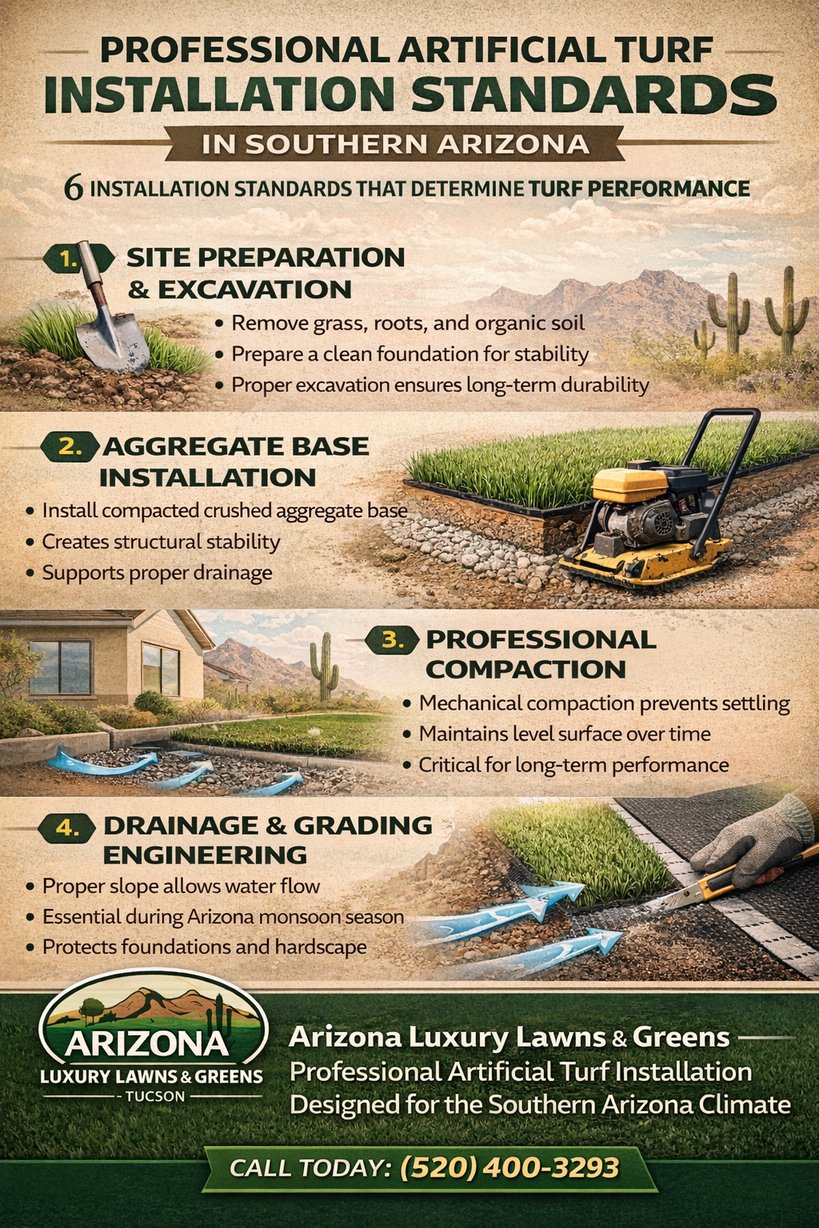
Many homeowners think of turf as a landscaping material. Professionals understand that it is actually a layered outdoor system, consisting of:
- Excavation and site preparation
- Aggregate base installation
- Compaction and grading
- Edge restraint installation
- Turf layout and seam integration
- Infill and finishing
Each step must be executed correctly for the entire system to perform as intended. Skipping or rushing any one stage can compromise the entire installation.
Proper Excavation: The Foundation of a Successful Installation
The first step in professional turf installation is removing existing material and preparing the site. This includes removing:
- Natural grass
- Organic soil layers
- Roots and debris
- Existing irrigation components (if necessary)
In Southern Arizona, soil conditions vary significantly. Some properties contain:
- Caliche-heavy soil
- Sandy desert soil
- Clay pockets
Professional installers must adapt excavation depth based on soil composition and intended use of the area. Proper excavation ensures:
- Base stability
- Proper drainage
- Long-term surface uniformity
Aggregate Base Installation
The aggregate base is the structural foundation of the turf system. A properly constructed base:
- Supports the turf
- Maintains surface levelness
- Enables drainage
- Prevents settling
Base materials commonly include:
- Decomposed granite
- Crushed aggregate blends
- Specialized base materials designed for compaction
Base depth must be appropriate for:
- Soil conditions
- Project size
- Intended use (pets, play areas, or decorative lawn)
The base should be installed in controlled layers and compacted thoroughly.
Compaction Standards
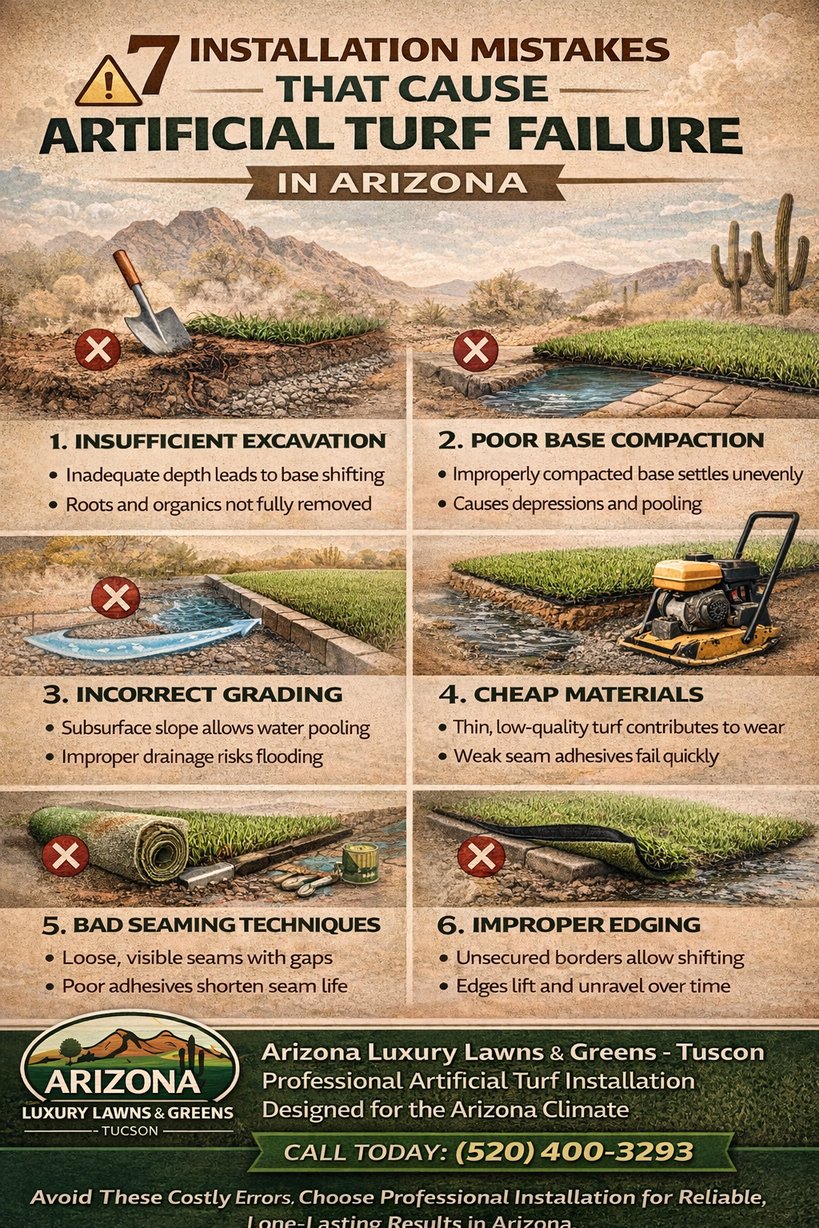
Compaction is one of the most critical — and most overlooked — steps in artificial turf installation. Without proper compaction, the base may settle over time, causing:
- Uneven surfaces
- Visible depressions
- Drainage pooling
- Turf wrinkling
Professional installation requires mechanical compaction equipment and careful attention to base density. Compaction typically occurs in stages as base material is installed. This process creates a stable, long-lasting foundation.
Grading & Drainage Engineering
Drainage planning is especially important in Southern Arizona’s monsoon climate. During intense summer storms, properties in areas such as Sahuarita, Green Valley, and Oro Valley can experience rapid runoff. Professional turf installations must account for this by ensuring the surface has proper grading. This helps water flow away from:
- Foundations
- Hardscape structures
- Patio areas
Artificial turf itself drains effectively, but the base system and grading determine how efficiently water moves through the installation. Proper drainage protects both the turf and the surrounding property.
Edge Restraints and Perimeter Stability
Edge restraints hold the turf system securely in place. Without proper perimeter stabilization, turf edges may shift over time. Professional edge systems often include:
- Steel edging
- Paver borders
- Concrete curbing
- Secure anchoring methods
These components keep the turf system locked into position while maintaining clean, defined edges.
Turf Layout and Seam Integration
Artificial turf comes in large rolls that must be carefully positioned across the project area. Professional installers carefully plan turf layout to:
- Minimize seams
- Maintain consistent grain direction
- Reduce material waste
Where seams are required, they must be joined using specialized seam tape and adhesive.
Poor seam placement or installation can lead to:
- Visible lines
- Separation over time
- Reduced durability
Professional seam work should be nearly invisible.
Infill and Surface Finishing
Infill material is applied after the turf is installed. The purpose of infill is to:
- Support turf blades
- Maintain upright appearance
- Improve durability
- Add stability
Common infill materials include:
- Silica sand
- Specialty performance infills
- EnviroFill
- ZeoFill
- Copper Slag
The correct amount of infill is essential. Too little can cause blades to flatten. Too much can reduce realism. After infill is applied, the turf is groomed to achieve a natural appearance.
Why Professional Installation Matters in the Arizona Climate
Southern Arizona presents unique challenges for landscaping materials. Installations must withstand:
- Intense UV exposure
- Summer heat exceeding 100°F
- Seasonal monsoon storms
- Dust and debris
- Soil expansion and contraction
Artificial turf installed according to professional standards is designed to perform reliably under these conditions. Shortcuts taken during installation often reveal themselves quickly in harsh desert environments.
Installation Standards and Long-Term Performance
A properly installed turf system should provide many years of performance with minimal maintenance. Professional installation supports:
- Surface stability
- Consistent appearance
- Reliable drainage
- Long-term durability
Artificial turf is designed to be a long-term landscaping solution, but only when installed correctly.
Choosing a Professional Turf Installation Partner
When evaluating artificial turf contractors, homeowners should prioritize:
- Installation standards
- Experience in Southern Arizona conditions
- Clear explanations of base preparation
- Professional workmanship
- Long-term reliability
Every property presents unique variables. Professional consultation ensures the installation plan aligns with the site’s conditions and the homeowner’s goals.
If you are considering artificial turf for your property in Tucson, Marana, Oro Valley, Sahuarita, Green Valley, Casa Grande, Florence, Eloy, Arizona City, Red Rock, or Tubac, a professional site evaluation is the best place to begin.