

Understanding How Artificial Turf Performs in the Arizona Climate
Why the Arizona Climate Changes the Turf Conversation
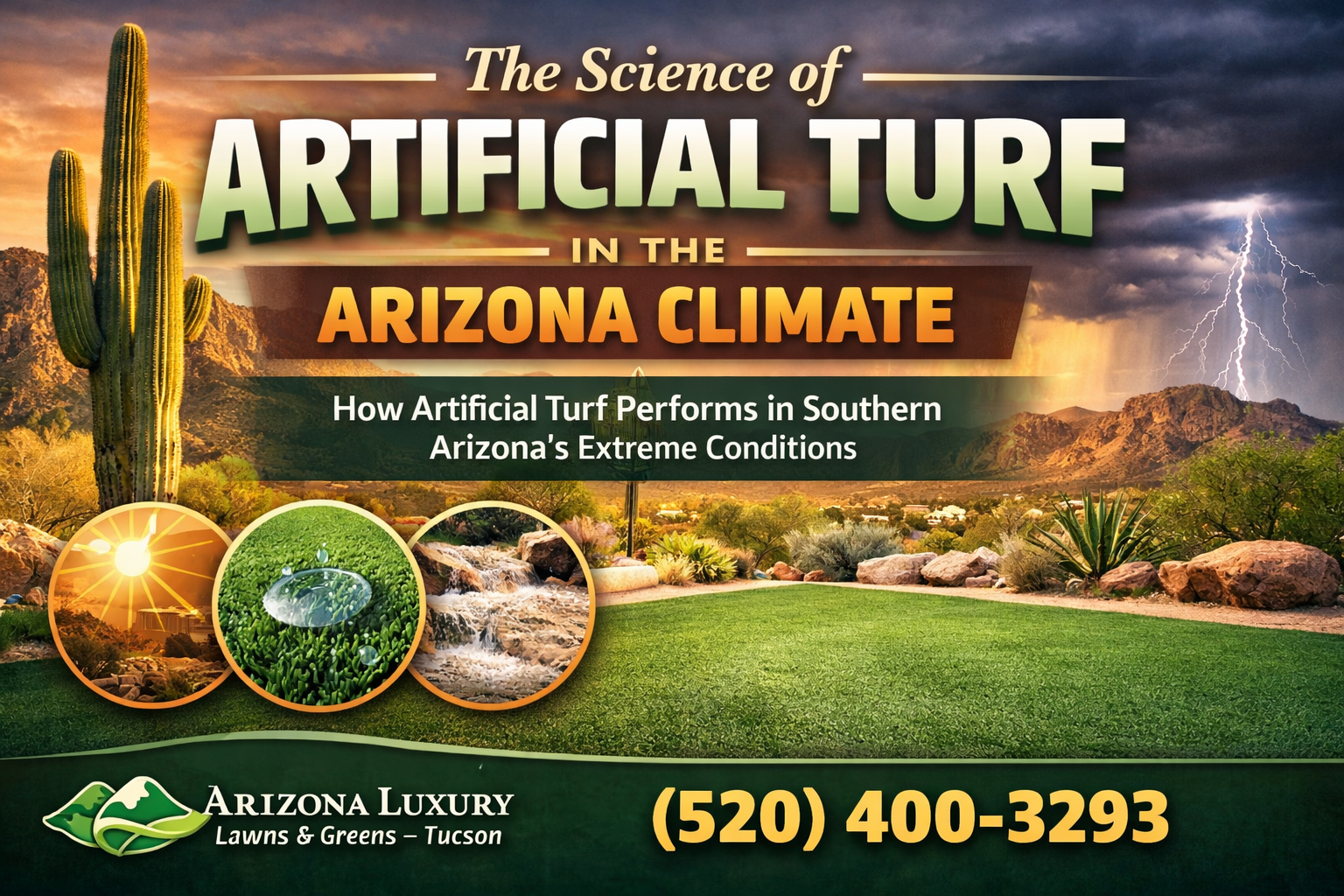
Installing artificial turf in Southern Arizona is very different from installing turf in coastal California, the Pacific Northwest, or the Midwest. The desert presents a unique set of environmental challenges that influence how turf must be designed and installed, including:
- Intense ultraviolet (UV) exposure
- Extended summer heat above 100°F
- Sudden monsoon storms and flash runoff
- Dry, compact desert soils
- Dust and wind conditions
For homeowners across Tucson, Oro Valley, Marana, Sahuarita, Green Valley, Casa Grande, Florence, Eloy, Arizona City, Red Rock, and Tubac, these conditions raise an important question:
Can artificial turf really perform well in the Arizona climate?
The answer is yes - when the system is designed and installed correctly.
Modern artificial turf systems are engineered to withstand harsh climates. However, performance depends heavily on:
- Proper base preparation
- Professional installation standards
- Turf product quality
- Correct drainage planning
This guide explains the science behind artificial turf performance in the desert and what homeowners should understand before investing in a turf landscape.
Understanding the Arizona Climate Challenges
The Desert Environment Is Demanding
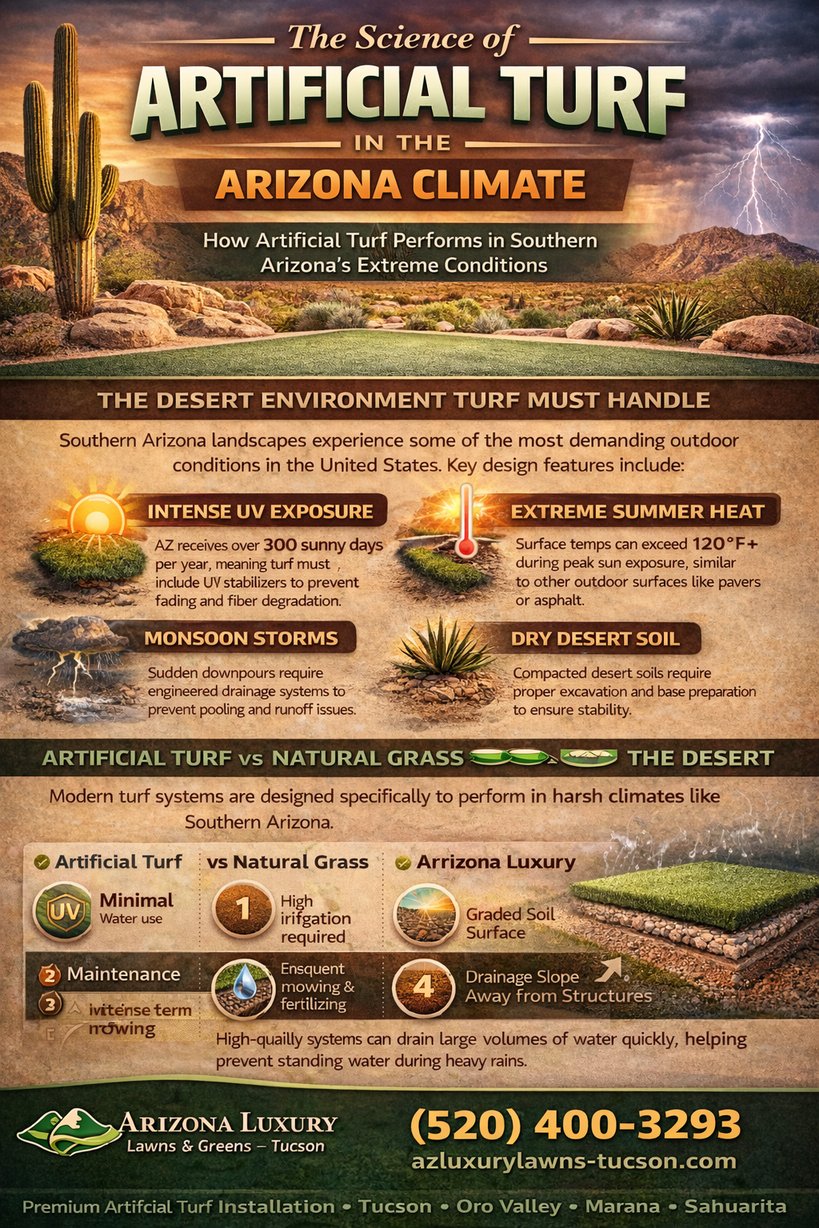
Southern Arizona’s environment is one of the most demanding climates for outdoor surfaces. Annual conditions typically include:
- Summer temperatures exceeding 100°F for months
- Intense UV radiation
- Minimal rainfall followed by heavy monsoon storms
- Dry, compact soils
- Seasonal dust and wind
Each of these factors influences how artificial turf must be installed to ensure durability and long-term performance. When properly engineered, artificial turf can perform exceptionally well in desert environments. But understanding these environmental forces is key.
Heat & Artificial Turf: What You Should Know
Does Artificial Turf Get Hot in the Summer?
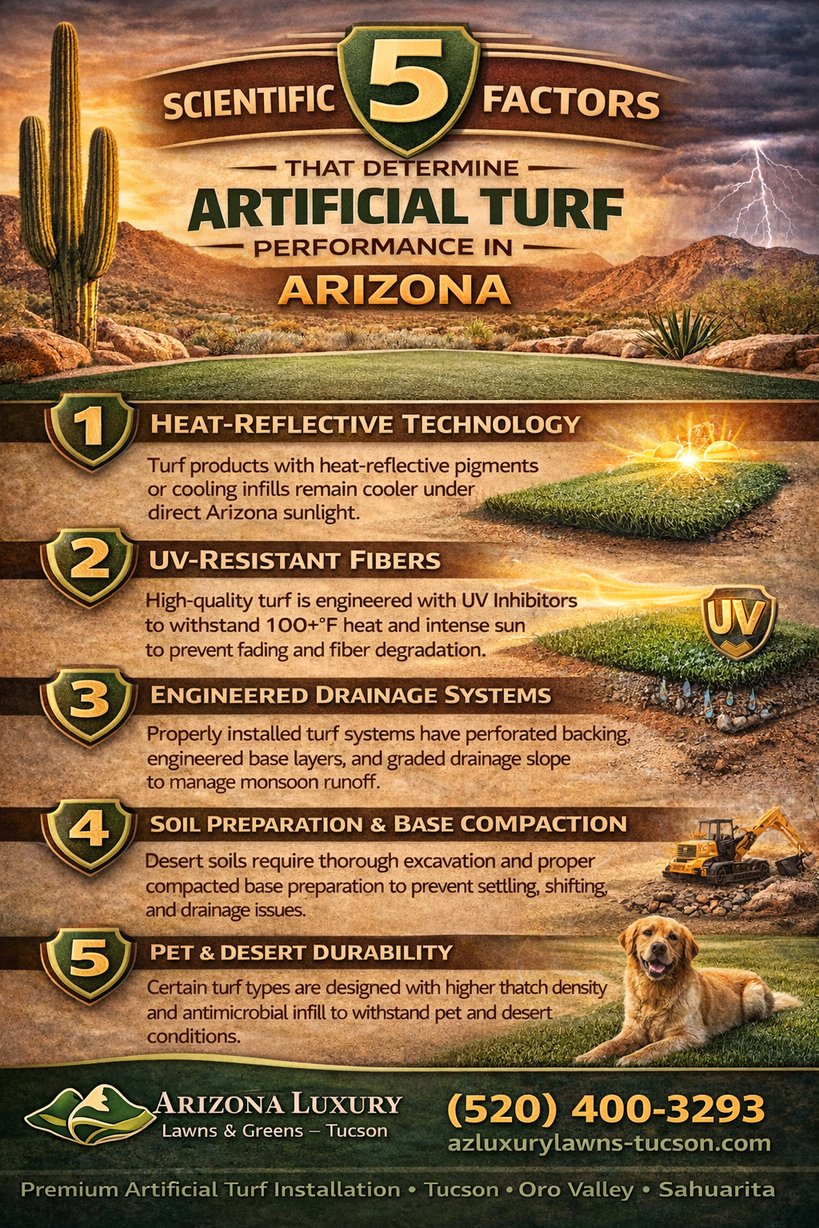
One of the most common concerns homeowners have is turf temperature. Artificial turf can become warm under direct sunlight, particularly during peak summer afternoons when temperatures exceed 100°F. However, several factors influence how turf handles heat.
Turf Fiber Technology
Modern turf fibers often include:
- UV-resistant polymers
- Heat-reflective pigments
- Structural reinforcement
Some premium turf products incorporate specialized cooling technologies designed to reduce heat absorption compared to older generations of artificial turf.
Airflow and Installation Design
Proper installation also influences heat management. Factors such as:
- Base materials
- Infill type
- Landscape airflow
- Shade conditions
...can affect surface temperature. Turf installed with proper base preparation allows air circulation through the backing system, which can help dissipate heat more effectively than compacted soil or concrete surfaces.
Real-World Perspective
In reality, many outdoor surfaces in Arizona become hot during peak summer conditions, including:
- Concrete
- Pavers
- Natural grass
- Sand
- Decking
Artificial turf behaves similarly to other exposed surfaces in extreme heat environments. Fortunately, simple strategies - such as periodic rinsing or shaded landscaping elements - can help moderate surface temperature.
UV Exposure & Turf Durability
Why UV Protection Matters in the Desert
Southern Arizona experiences some of the highest UV exposure levels in the United States. Without proper protection, many outdoor materials degrade quickly in desert conditions. Modern artificial turf is manufactured with UV stabilizers that protect fibers from:
- Fading
- Brittleness
- Structural degradation
These stabilizers allow high-quality turf products to maintain color and durability for many years under direct sunlight.
Fiber Engineering
Turf fibers are typically manufactured from polyethylene or similar advanced polymers designed for outdoor performance. These materials provide:
- Flexibility
- Color stability
- Impact resistance
- UV durability
When combined with proper installation, modern turf products are designed to withstand Arizona’s sun exposure for many years.
Monsoon Season & Drainage Engineering
Why Drainage Is Critical in Southern Arizona
While the desert receives relatively little annual rainfall, monsoon storms can produce sudden, heavy downpours. These storms create large volumes of runoff in short periods of time. Proper drainage planning ensures that artificial turf systems can manage these events effectively.
How Artificial Turf Drains Water
Artificial turf is designed with perforated backing that allows water to pass through the surface into the base layer below. A properly installed turf system typically includes:
- Compacted aggregate base
- Graded surface slope
- Permeable backing
- Natural soil drainage
When engineered correctly, water drains through the system and flows away from the property.
Why Grading Matters
Poor grading can lead to:
- Standing water
- Saturated soil
- Long-term surface issues
Professional installers plan drainage carefully to ensure water flows away from structures and toward appropriate runoff areas.
Soil Conditions in Southern Arizona
Understanding Desert Ground Conditions
The soils found across Southern Arizona vary significantly. Properties in Tucson, Marana, and Oro Valley may contain:
- Caliche-heavy soils
- Compact desert clay
- Sandy loam conditions
Each soil type influences excavation depth and base preparation strategy. Proper base installation creates a stable foundation that resists shifting and settling over time.
Dust, Wind, and Desert Conditions
Southern Arizona landscapes also experience frequent dust and wind conditions. Artificial turf systems can help reduce:
- Dust generation
- Bare soil exposure
- Mud during rain events
Because turf covers exposed soil, it can create a cleaner outdoor environment compared to bare desert landscaping.
Artificial Turf and Water Conservation
Why Turf Is Becoming Popular in Desert Regions
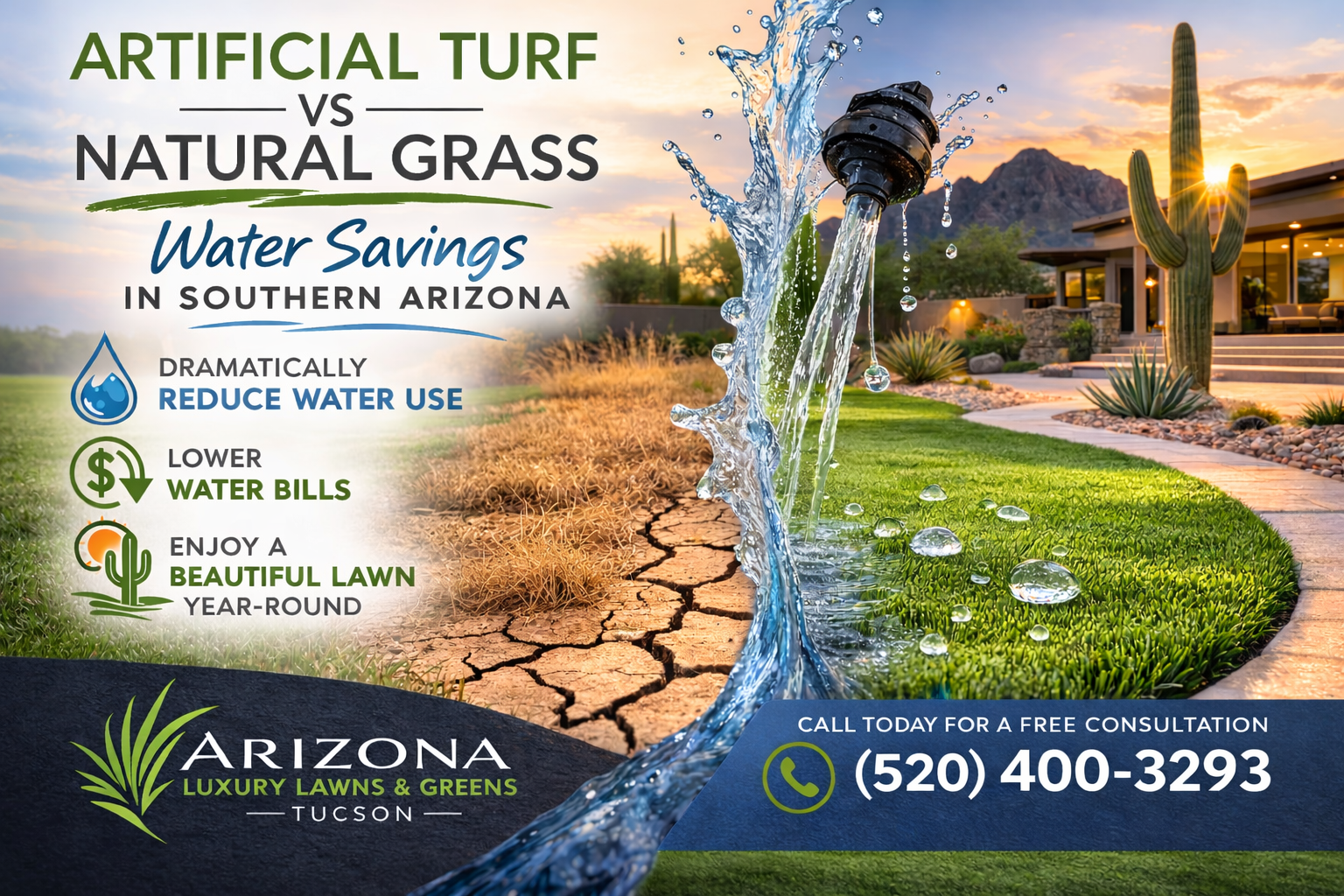
Water conservation is one of the most significant reasons homeowners are transitioning away from natural grass. Traditional lawns require substantial irrigation to remain green in the desert. Artificial turf eliminates the need for routine watering while maintaining a consistent appearance year-round. For many homeowners in Tucson and surrounding communities, turf provides a practical solution that balances aesthetics with responsible water use.
Longevity of Artificial Turf in Arizona
How Long Does Artificial Turf Last in the Desert?
High-quality artificial turf systems installed correctly can perform for many years. Longevity depends on several factors:
- Turf fiber quality
- Installation standards
- Usage levels
- Maintenance practices
Professional installations designed for Arizona’s climate can maintain appearance and performance well beyond a decade. Proper base preparation and drainage planning are essential contributors to longevity.
The Importance of Professional Installation
Artificial turf is not simply rolled out and secured. It is a multi-layer outdoor system that requires technical installation methods. Key installation components include:
- Excavation and base preparation
- Compaction in controlled lifts
- Precision seam placement
- Edge restraint installation
- Drainage grading
Each step influences the long-term durability of the turf system. In extreme climates like Southern Arizona, installation quality plays an especially important role.
Artificial Turf vs Traditional Landscaping in the Arizona Desert
Homeowners often compare turf to other landscaping options such as:
- Natural grass
- Gravel yards
- Xeriscape landscaping
Artificial turf provides a balance between:
- Visual appeal
- Reduced maintenance
- Water conservation
- Year-round greenery
When designed thoughtfully, turf can complement desert landscaping elements such as decorative gravel, pavers, and native plants.
Frequently Asked Questions About Turf in Arizona
Is artificial turf safe in the Arizona heat?
Answer: Modern turf products are designed for outdoor environments and include UV protection and durable fibers.
Does artificial turf fade in the sun?
Answer: Quality turf products include UV stabilizers that help maintain color over time.
Can artificial turf handle monsoon storms?
Answer: Yes. Proper installation includes drainage planning to manage rainfall and runoff.
Will artificial turf shift or wrinkle?
Answer: When installed on a properly compacted base, turf remains stable and secure.
Does artificial turf require maintenance?
Answer: Minimal maintenance is required, typically involving debris removal and occasional grooming.
Final Thoughts
Artificial Turf Designed for the Desert
Artificial turf has evolved significantly over the past two decades. Modern turf systems are engineered to perform in demanding climates - including the deserts of Southern Arizona. When properly designed and installed, artificial turf can provide:
- Consistent green appearance
- Reduced maintenance
- Long-term durability
- Water-conscious landscaping
For homeowners and property owners across Tucson, Marana, Oro Valley, Sahuarita, Green Valley, Casa Grande, Florence, Eloy, Arizona City, Red Rock, and Tubac, turf offers a practical solution tailored to desert living.
Top