

Why Buying Artificial Turf Is Not a Simple Purchase
Across Tucson, Oro Valley, Marana, Sahuarita, Green Valley, Casa Grande, Florence, Eloy, Arizona City, Red Rock, and Tubac, homeowners are replacing natural grass at record rates. But many approach artificial turf like they’re buying flooring or sod. That’s a mistake.
Artificial turf in Southern Arizona is:
- Infrastructure
- Drainage engineering
- Heat-management planning
- Long-term property investment
This guide exists to help you avoid costly mistakes and make a confident, informed decision.
The 10 Most Common Mistakes Homeowners Make When Buying Artificial Turf
1. Focusing Only on Price Per Square Foot
The lowest bid often excludes:
- Proper excavation
- Adequate base depth
- Correct compaction
- Drainage planning
- Long-term durability considerations
Price without context is misleading.
2. Not Understanding What’s Under the Turf
The base system determines:
- Longevity
- Stability
- Drainage
- Appearance
If a contractor cannot clearly explain:
- Excavation depth
- Base material type
- Compaction method
- Drainage slope
You should pause.
3. Ignoring Drainage in Monsoon Season
Southern Arizona monsoons are unforgiving. Poor grading leads to:
- Water pooling
- Foundation risk
- Turf displacement
- Odor issues (especially with pets)
Drainage is engineering - not optional.
4. Choosing the Wrong Turf Product for the Application
A light-traffic decorative turf is not ideal for:
- Dogs
- Children
- High-foot-traffic areas
- Commercial entrances
Matching product to purpose matters.
5. Overlooking Seam Placement
Poorly placed seams:
- Become visible
- Separate over time
- Reduce durability
Professional seam minimization is a technical skill.
6. Assuming All Turf Products Are the Same
Differences include:
- Face weight (60 oz vs 75 oz)
- Fiber shape
- UV resistance
- Heat-reflective properties
- Thatch density
- Manufacturing quality
The desert quickly exposes inferior materials.
7. Not Verifying Installation Warranty
Ask:
- What does the installation warranty cover?
- How long does it last?
- What voids it?
Manufacturer warranties do not cover poor installation.
8. Underestimating Site Accessibility
Narrow gates in established Tucson neighborhoods can affect labor planning and logistics. Proper access impacts efficiency and investment.
9. Skipping Professional Site Evaluation
Every yard is different - variables include:
- Soil composition
- Existing grading
- Proximity to wash zones
- Irrigation remnants
- Hardscape integration
Quotes without site review are speculative.
10. Installing Turf Below a Cost-Efficient Threshold
Most professional installations begin around 225 square feet. Below that, mobilization and base prep requirements often make projects less cost-effective long term.
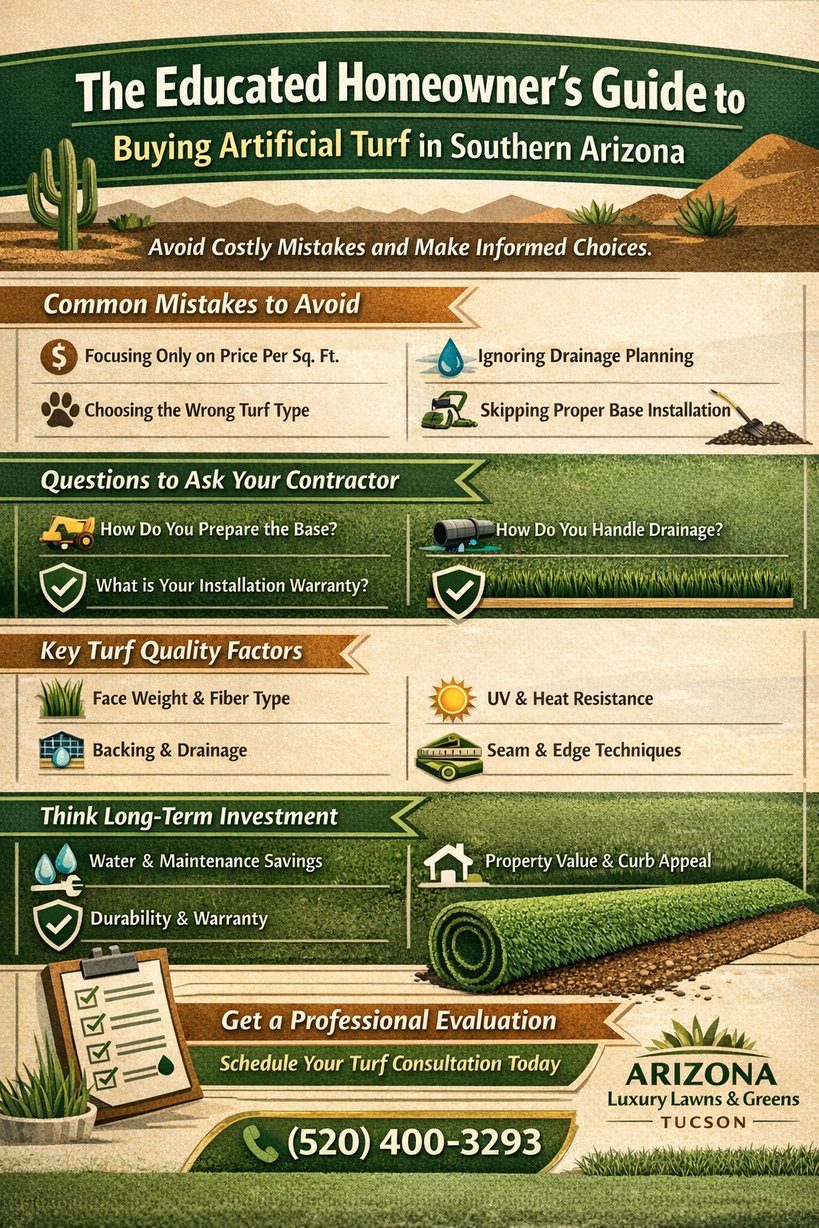
What Questions Should You Ask Before Hiring a Turf Contractor?
Ask:
- What excavation depth do you recommend for my soil type?
- What base materials do you use?
- How do you handle drainage during monsoon season?
- How do you minimize seams?
- What is your installation warranty?
- How do you secure edges?
- How long have you installed turf in Southern Arizona?
- Can you explain turf product differences?
- How do you manage pet applications?
- What separates your installation standards from competitors?
If a contractor struggles with these - reconsider.
What Questions Should You Ask Before Hiring a Turf Contractor?
Face Weight - Higher face weight often means:
- Greater density
- Improved durability
- More realistic appearance
But weight alone does not determine quality.
Fiber Technology - Modern fibers incorporate:
- UV inhibitors
- Heat-reflective pigments
- Structural reinforcement
Important in Southern Arizona’s intense sun.
Backing System - The backing holds everything together. Look for:
- Multi-layer backing
- Proper drainage perforations
- Structural stability
Thatch Layer - Thatch contributes to:
- Realistic appearance
- Blade support
- Reduced matting
How Artificial Turf Performs in Arizona's Climate
Desert-specific considerations:
- 100+ degree summers
- UV intensity
- Monsoon runoff
- Soil expansion & contraction
Turf performance depends on:
- Installation standards
- Proper grading
- Product quality
- Drainage planning
Climate performance should be discussed clearly by your contractor.
Residential vs Light Commercial Considerations
Residential goals often focus on:
- Aesthetic appeal
- Pet durability
- Reduced maintenance
- Family usability
Light commercial projects prioritize:
- Traffic tolerance
- Clean entry presentation
- Durability
- Maintenance reduction
- Professional appearance
Different goals require different strategies.
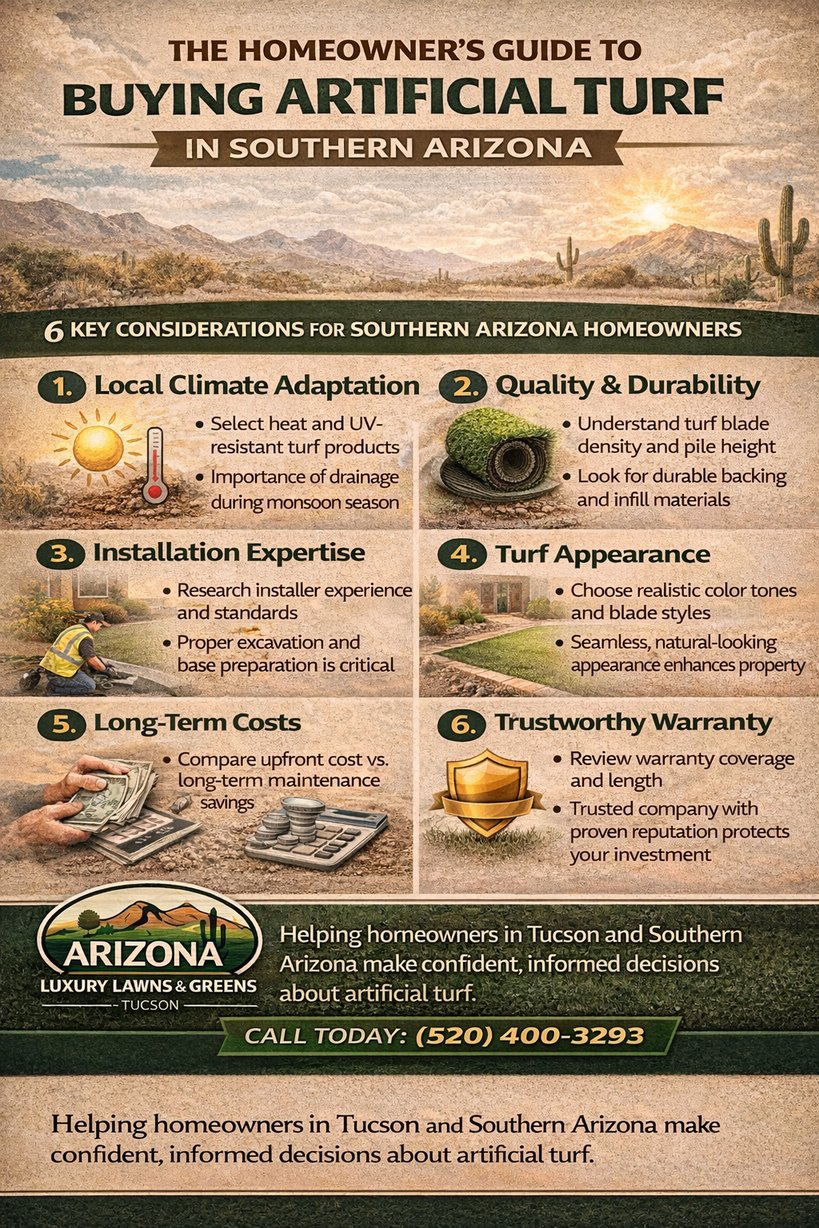
Artificial Turf as a Long-Term Investment
When viewed strategically, turf can:
- Stabilize landscaping costs
- Reduce water exposure
- Improve property presentation
- Increase curb appeal
- Simplify maintenance routines
The question is rarely “How cheap can I install turf?”
The better question is “How long do I want this solution to perform?”
The Step-by-Step Turf Buying Process
- Define your objective
- Schedule a professional evaluation
- Review detailed proposal
- Understand base & drainage plan
- Confirm turf selection
- Review warranty coverage
- Schedule installation
- Post-install walkthrough
Clear process builds confidence.
Frequently Asked Buyer Questions
Is artificial turf safe for pets and children?
Answer: Properly installed turf systems are widely used for both.
How long does installation take?
Answer: Most residential projects are completed efficiently once base prep begins.
Will weeds grow through turf?
Answer: Proper base prep dramatically reduces weed intrusion.
Does turf require maintenance?
Answer: Minimal - primarily debris removal and occasional grooming.
Is artificial turf hot in summer?
Answer: Heat varies based on product and environment; strategic planning mitigates concerns.
Make a Confident, Educated Decision
If you’re considering artificial turf in...
Tucson, Oro Valley, Marana, Sahuarita, Green Valley, Casa Grande, Florence, Eloy, Arizona City, Red Rock, or Tubac
Your next step should not be collecting the cheapest quote. It should be gaining clarity. Schedule a professional consultation and receive a customized evaluation aligned with your property, soil conditions, and long-term goals.