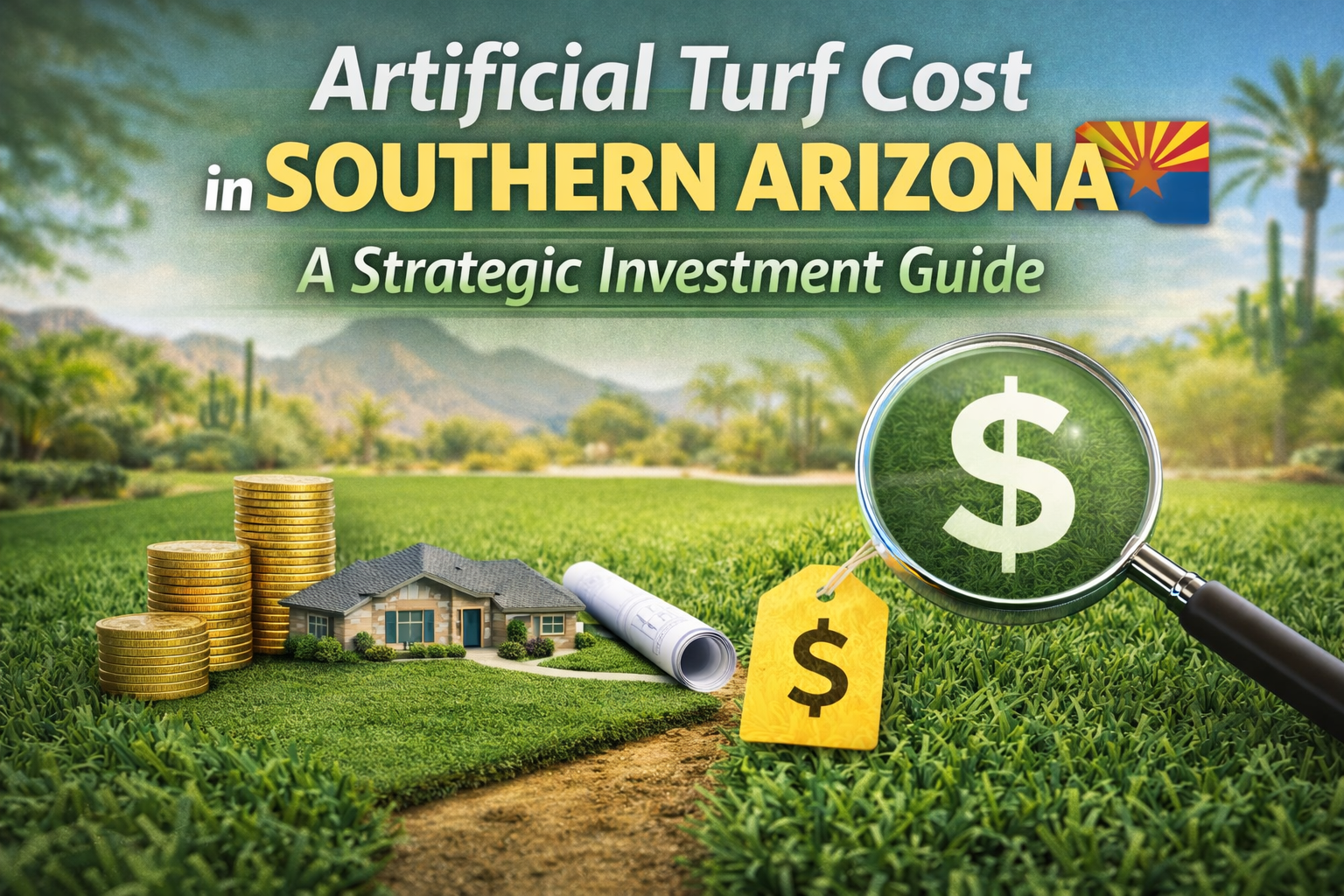

Understanding Artificial Turf as a Long-Term Landscape Investment
Why Artificial Turf Pricing Isn’t One-Size-Fits-All in Southern Arizona
Across Tucson, Marana, Oro Valley, Sahuarita, Green Valley, Casa Grande, Florence, Eloy, Arizona City, Red Rock, and Tubac, homeowners and light commercial property owners are asking the same question:
“How much does artificial turf really cost?”
It’s a fair question - but it’s also the wrong starting point.
In Southern Arizona, artificial turf isn’t simply a landscaping purchase. It’s a long-term investment decision driven by:
- Rising water costs
- Extreme desert heat
- Monsoon drainage challenges
- Ongoing maintenance fatigue
- HOA curb appeal expectations
- Property value considerations
The truth is this:
Artificial turf pricing varies because no two properties - or objectives - are identical.
This guide will help you understand:
- What influences artificial turf investment
- Why quotes vary
- How turf compares financially to natural grass
- What a smart long-term turf strategy looks like
And most importantly - how to plan correctly.
What Homeowners & Businesses Should Expect to Invest
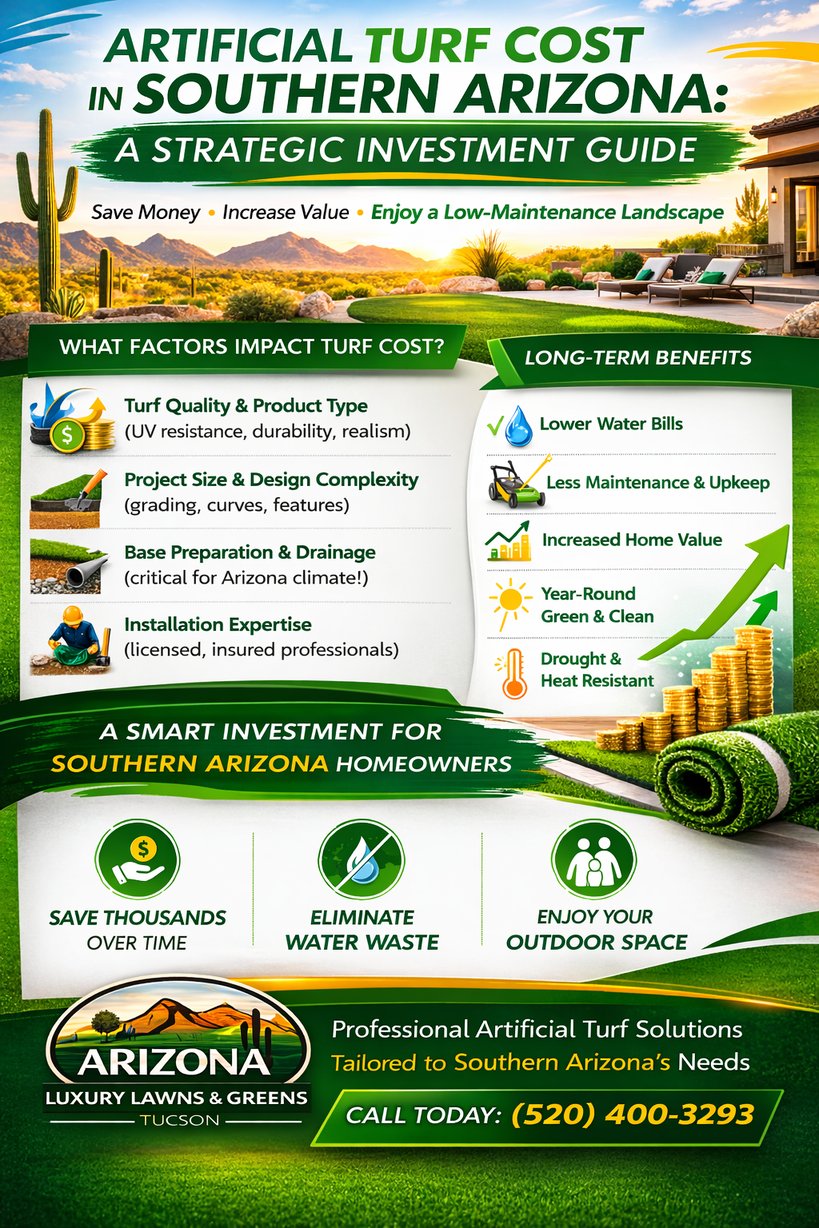
Professionally installed artificial turf projects in Southern Arizona typically fall within a broad investment range depending on:
- Total square footage
- Site accessibility
- Soil conditions
- Drainage needs
- Turf product selection
- Specialty features (putting greens, pet systems, playground zones)
For most residential installations, projects begin at approximately 225 square feet. While smaller areas are occasionally completed, installations below that threshold often become cost-inefficient due to mobilization, excavation, and base preparation requirements.
At Arizona Luxury Lawns & Greens – Tucson, we believe in doing projects correctly - not cheaply. Proper base preparation, compaction, grading, and seam planning require a certain scale to ensure long-term performance.
Light commercial properties — such as office buildings, small retail centers, and HOA common areas — often require additional planning for:
- Increased foot traffic
- Expanded drainage engineering
- Edge restraint durability
- Larger access considerations
The key takeaway:
Artificial turf is customized infrastructure - not a commodity product.
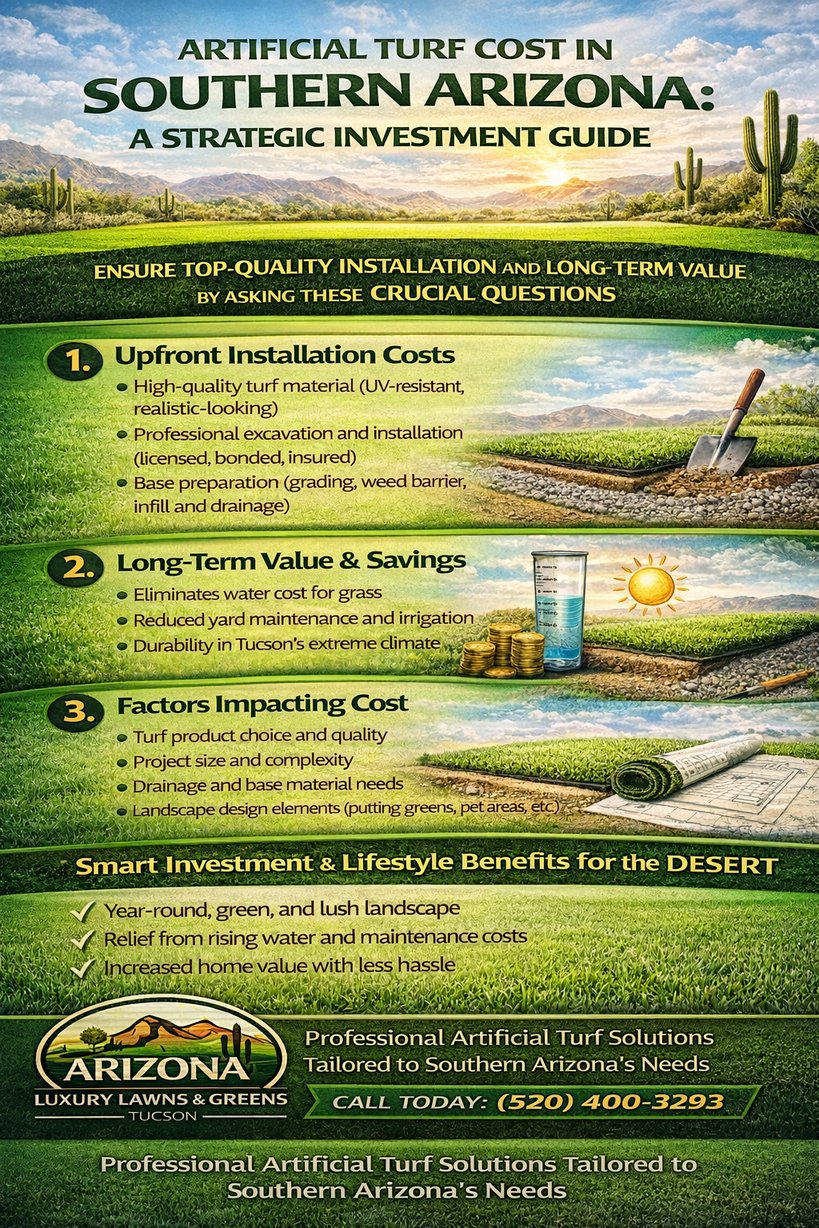
The Key Factors That Influence Turf Investment
1. Excavation & Base Preparation
This is the most overlooked - and most critical - cost factor.
Southern Arizona soils vary widely between Tucson, Marana, and Florence. Some properties sit on caliche-heavy soil. Others have loose sandy conditions. Some sit along wash areas near Sahuarita or Green Valley that demand advanced drainage planning.
Proper installation includes:
- Removing existing organic material
- Excavating to appropriate depth
- Installing compacted aggregate base
- Grading for positive drainage
- Compacting in controlled lifts
Shortcuts here lead to:
- Settling
- Wrinkles
- Drainage pooling
- Premature failure
The base is the foundation of your investment.
2. Soil Conditions & Drainage Planning
Monsoon season changes everything.
Homes in Oro Valley, Red Rock, and areas near washes often require enhanced drainage planning. Proper grading ensures water flows away from:
- Foundations
- Patio slabs
- Retaining walls
Water management isn’t optional in the desert - it is engineering.
3. Turf Product Selection
Not all turf is created equal.
Variables include:
- Face weight (60 oz vs 75 oz)
- Fiber composition
- UV inhibitors
- Heat-reflective technologies
- Blade shape and durability
- Thatch density
Higher-performance turf products:
- Withstand intense UV exposure
- Maintain color longer
- Resist matting
- Perform better under traffic
- Blade shape and durability
Selecting turf should align with your intended use - not simply your initial budget.
4. Seam Layout & Waste Optimization
Large open yards allow efficient seam planning.
Complex layouts with curves, islands, and hardscape transitions increase material handling and labor precision.
Seams are a technical art. Done poorly; they become visible and weaken over time.
Professional seam minimization reduces:
- Visible transitions
- Long-term wear risks
- Waste inefficiencies
5. Site Accessibility
Access matters more than most homeowners realize.
Projects in established Tucson neighborhoods with narrow gates may require:
- Hand hauling material
- Additional labor hours
- Specialized equipment staging
Meanwhile, new developments in Marana or Casa Grande may allow easier access and efficiency.
Logistics influence investment.
6. Specialty Features
Certain installations increase complexity:
- Backyard putting greens
- Multi-zone pet systems
- Playground fall protection systems
- Integrated pavers
- Custom edge restraints
Each adds performance value — and additional planning.
Artificial Turf vs Natural Grass: The Long-Term Cost Comparison
The question isn’t just:
“How much does turf cost?”
It is:
“What does grass really cost over 15 - 20 years?”
Natural grass expenses include:
- Water (increasing annually in Southern Arizona)
- Irrigation system repairs
- Fertilizer
- Overseeding
- Pest control
- Equipment replacement
- Labor or landscaping service fees
Even modest lawns in Tucson or Green Valley can consume thousands of gallons per month during peak season.
Over time, many homeowners discover:
The cost of maintaining grass often exceeds the investment in turf — especially when factoring in:
- Time savings
- Equipment replacement
- Water inflation trends
Artificial turf provides cost stability in an increasingly unstable water environment.
Is Artificial Turf Worth the Investment?
For many Southern Arizona homeowners, the answer becomes clear when evaluated strategically.
Artificial turf can:
- Reduce long-term water expenses
- Eliminate routine lawn service costs
- Increase curb appeal
- Improve resale presentation
- Eliminate mud & dust
- Simplify pet maintenance
- Provide year-round green aesthetics
Light commercial properties benefit from:
- Reduced groundskeeping costs
- Consistent visual branding
- Simplified maintenance
- Cleaner entry areas
The decision becomes less about price - and more about long-term value.
Why the Lowest Bid Is Rarely the Smartest Decision
When evaluating turf estimates, beware of:
- Minimal base depth
- Improper compaction
- Thin edge restraints
- Excessive seam placement
- Inferior drainage planning
- Limited installation warranties
Shortcuts reduce upfront cost - but increase long-term risk.
In Southern Arizona’s extreme environment, durability is not optional.
The desert exposes poor workmanship quickly.
Example Investment Scenarios (Residential Modeling)
Scenario A: 500 sq. ft. Backyard Conversion – Standard Access
Includes
- Excavation
- Base installation
- Professional compaction
- Premium turf
- Perimeter securing
Straightforward layouts are more cost-efficient.
Scenario B: 800 sq. ft. Yard with Drainage Considerations
Additional:
- Grading adjustments
- Drainage channel integration
- Hardscape transitions
Water management planning increases complexity — but protects property long-term.
Scenario C: 600 sq. ft. Pet Turf System with Drainage Layer
Includes:
- Enhanced drainage design
- Specialized base materials
- Odor mitigation planning
Performance customization increases durability.
Planning Your Turf Investment Strategically
Smart turf planning includes:
- Evaluating long-term property goals
- Considering phased installation (if applicable)
- Integrating hardscape where appropriate
- Planning for monsoon runoff
- Aligning turf type with usage
The best turf projects are planned - not rushed.
Artificial Turf Cost FAQs
Question: Does artificial turf increase property value?
Answer: Well-designed landscaping can enhance curb appeal and buyer perception.
Question: Is turf cheaper than grass long term?
Answer: Often yes — especially when factoring water and maintenance costs.
Question: How long does artificial turf last in Arizona?
Answer: High-quality installations often perform 15–20 years with proper base preparation.
Question: Why do quotes vary so much?
Answer: Base prep, drainage, access, turf selection, and installation standards vary significantly.
Question: Is 225 sq. ft. really the minimum?
Answer: While smaller jobs are occasionally possible, projects below that threshold often lose cost-efficiency due to mobilization and installation standards required for durability.
Ready for a Precise Turf Investment Assessment?
Every property in Tucson, Marana, Oro Valley, Sahuarita, Green Valley, Casa Grande, Florence, Eloy, Arizona City, Red Rock, and Tubac has unique variables.
The only way to receive a precise investment number is through a professional site evaluation.
If you’re ready to:
- Eliminate water-heavy grass
- Simplify maintenance
- Improve curb appeal
- Design a long-term outdoor solution
.png)