
Why Playground Safety Matters | Playground Safety | IPEMA Certification | Importance of Fall Height Ratings | Geo Flo+ Play Pad | Artificial Turf vs Traditional Playgrounds | Benefits of Artificial Turf for Playgrounds | Playground Turf in Residential Backyards | Artificial Turf for Schools & Daycare Centers | Playground Turf for HOA Community Spaces | Drainage Considerations for Playgrounds | Heat Considerations in Arizona Playgrounds | Maintenance of Playgrounds | Long-Term Durability of Playground Turf | Creating Safer Play Environments in Tucson | Considering Playground Turf for Your Property?
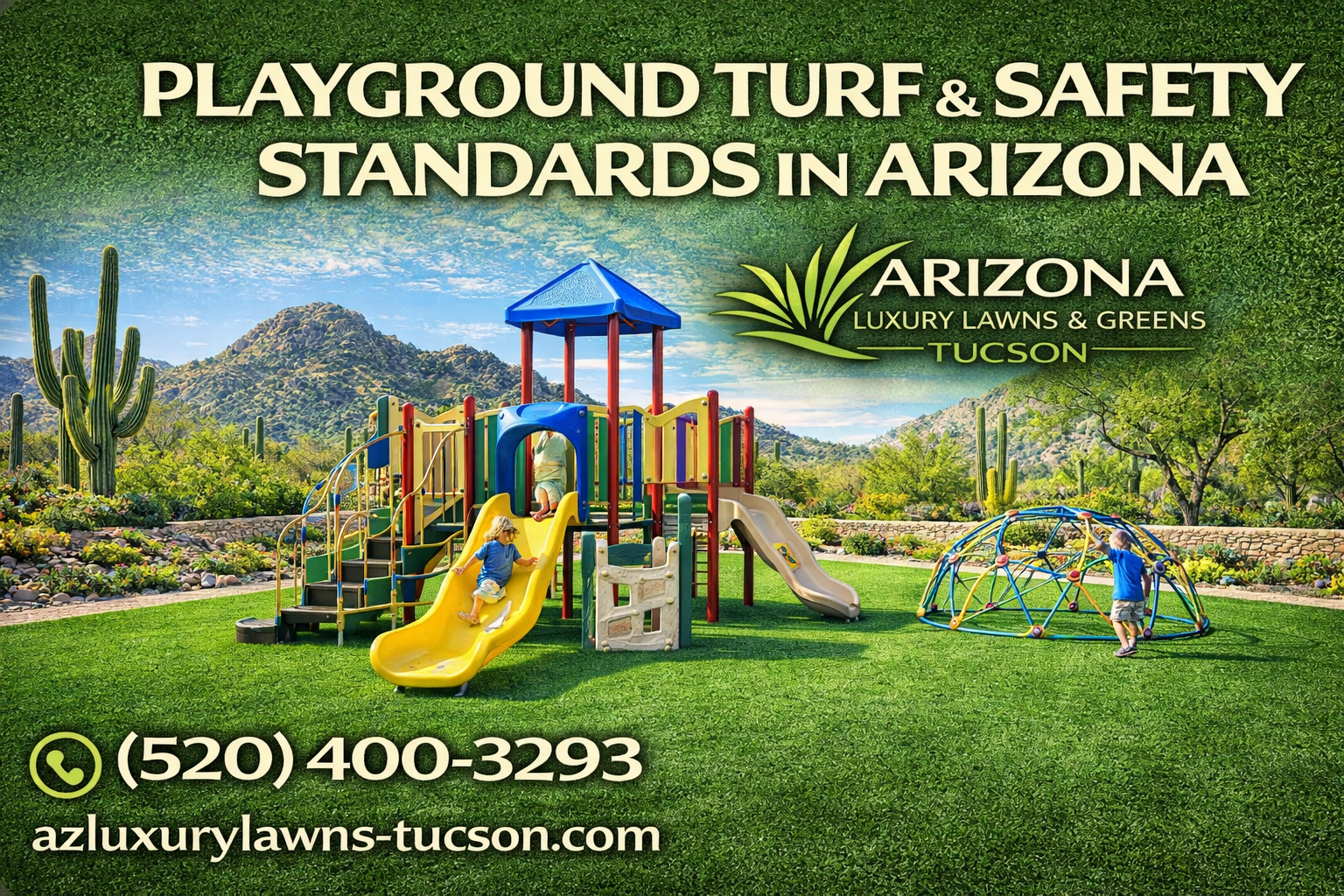

Why Playground Safety Matters in Southern Arizona
What Parents, Schools, and HOAs Should Know
Playgrounds are designed to be spaces where children can explore, learn, and play safely. Across Tucson, Oro Valley, Marana, Sahuarita, Green Valley, Amado, Casa Grande, Florence, Eloy, Arizona City, Red Rock, Tubac, Rio Rico, Sierra Vista, Huachuca City, Benson, Vail, Corona de Tucson, Oracle, San Manuel, and surrounding communities, many families, schools, and community organizations are looking for ways to create outdoor play environments that balance safety, durability, and long-term performance.
Traditional playground surfaces such as natural grass, dirt, or decomposed granite often present challenges in the Southern Arizona desert climate, including:
- Hard ground surfaces
- Dust and debris
- Mud after irrigation or rain
- Uneven terrain over time
- Ongoing maintenance needs
Artificial turf playground systems have become an increasingly popular solution for addressing these challenges while providing a clean and durable play surface.
However, not all artificial turf playground installations are the same. Safety standards, proper padding systems, and professional installation practices all play a critical role in creating safe play environments.
This guide explains the key playground turf safety considerations and standards used in Arizona.
Understanding Playground Safety Surfaces
When evaluating playground surfaces, the most important consideration is impact safety.
Children naturally run, climb, and jump while playing. If a fall occurs, the surface beneath playground equipment plays a critical role in reducing the risk of injury.
Safety surfaces are designed to:
- Absorb impact energy
- Reduce fall-related injuries
- Provide consistent ground conditions
- Maintain durability over time
Artificial turf playground systems are specifically engineered to help meet these safety requirements when installed with appropriate padding layers.
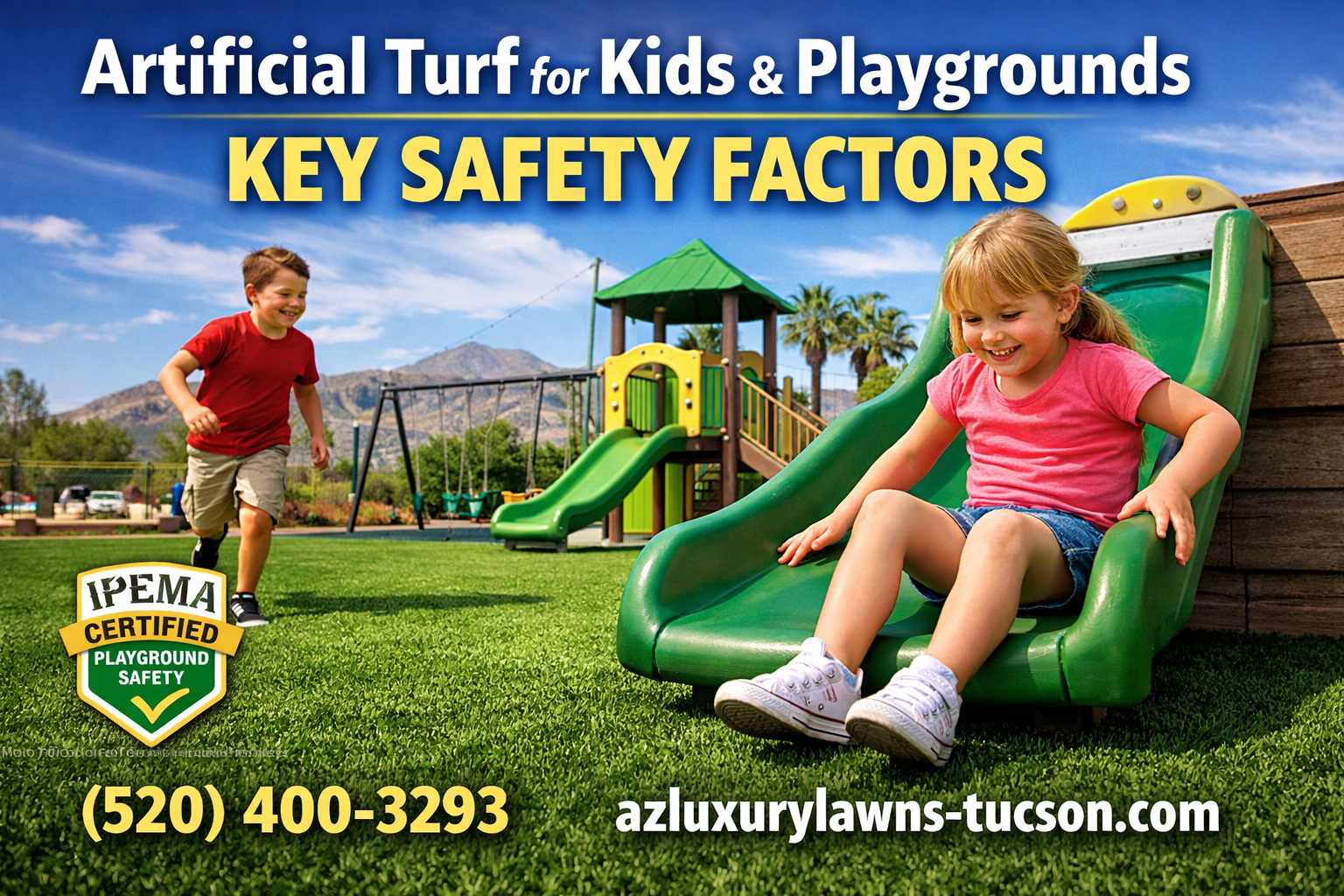
What Is IPEMA Certification?
One of the most widely recognized safety benchmarks for playground surfaces is IPEMA certification.
IPEMA stands for the International Play Equipment Manufacturers Association, an organization that helps verify playground equipment and surface systems for safety compliance.

IPEMA certification indicates that playground surfaces have been independently tested to meet recognized safety standards related to fall protection.
These standards help ensure playground systems are designed to reduce the risk of serious injuries from falls.
The Importance of Fall Height Ratings
Playground safety surfaces are evaluated based on fall height ratings, which indicate the maximum height from which a child could fall while the surface still provides adequate impact protection. Examples include:
- Equipment platforms
- Climbing structures
- Slides
- Monkey bars
Each playground structure has a recommended fall height requirement that determines the amount of cushioning needed beneath the equipment.
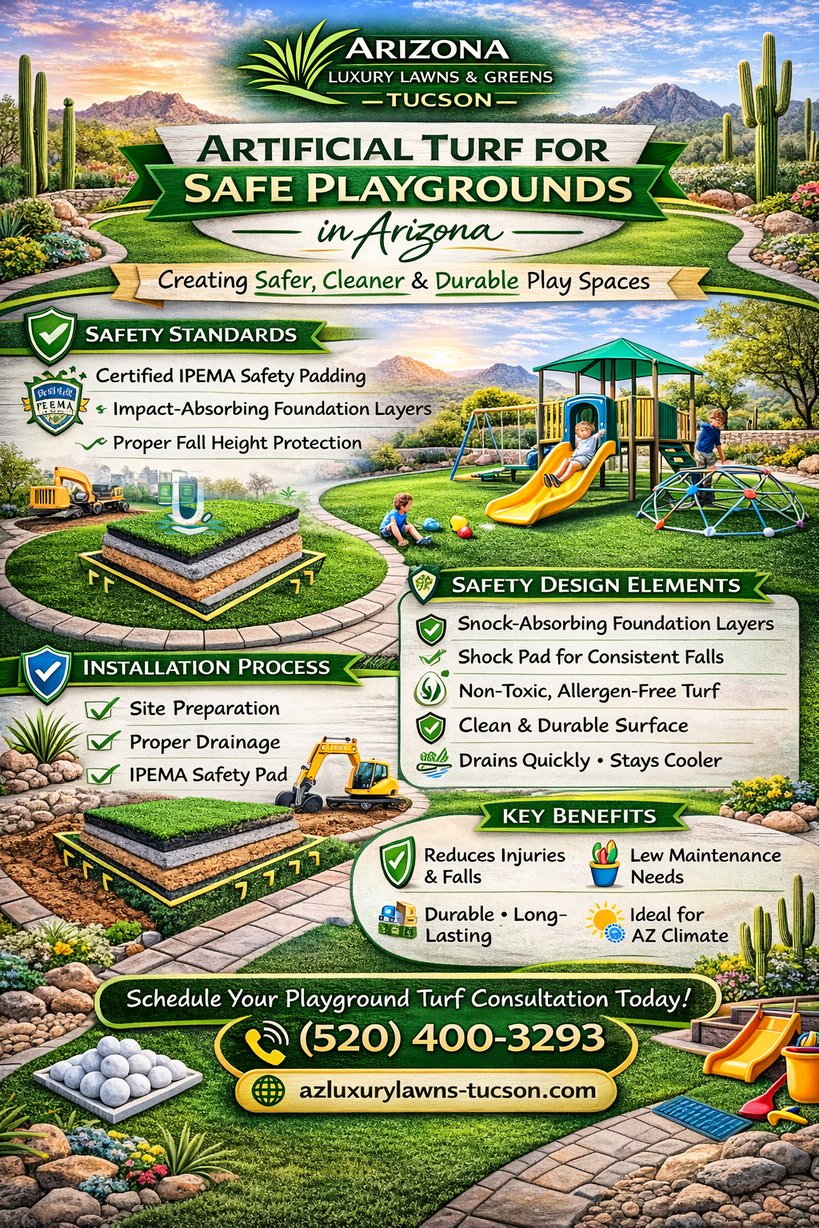
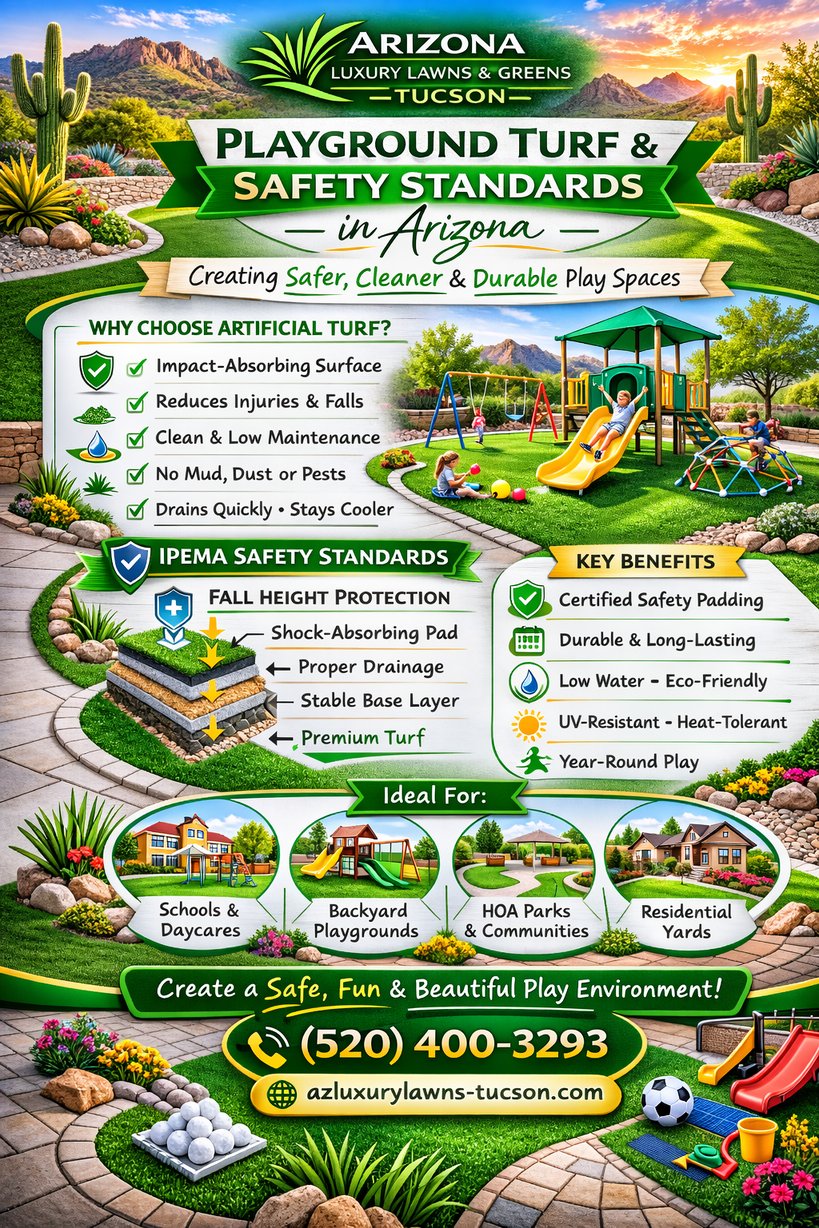
Artificial turf playground systems can be engineered with specialized padding layers (cushioned surfaces with Geo Flo+ Play Pad) to meet these requirements.
Geo Flo+ Play Pad Systems
One of the most commonly used impact-attenuation systems for playground turf installations is the Geo Flow+ play pad. This specialized padding layer is installed beneath the artificial turf and helps absorb impact energy during falls.
Geo Flow+ play pads are designed to:
- Provide consistent cushioning
- Support IPEMA safety compliance
- Maintain durability over time
- Improve overall playground safety
These systems are commonly used in:
- School playgrounds
- Daycare centers
- HOA community parks
- Residential backyard playgrounds
When combined with high-quality artificial turf, Geo Flow+ padding helps create safer play environments.
Artificial Turf vs Traditional Playground Surfaces
Playgrounds historically used materials such as sand, rubber mulch, wood chips, or pea gravel. While these materials can provide impact absorption, they often require ongoing maintenance. Common issues include:
- Material displacement
- Uneven surfaces
- Frequent replenishment needs
- Dust or debris buildup
Artificial turf playground systems offer several advantages compared to these traditional materials.
Benefits of Artificial Turf for Playgrounds
Artificial turf playground surfaces can provide:
- Consistent fall protection when paired with safety padding
- Reduced dust and loose debris
- Clean and attractive appearance
- Low ongoing maintenance
- Durable surfaces for frequent use
These characteristics make artificial turf an appealing option for schools, daycare centers, HOAs, and homeowners.
Playground Turf in Residential Backyards
Many homeowners in Southern Arizona are installing backyard playgrounds for their children.
Artificial turf can provide a comfortable and durable surface beneath:
- Swing sets
- Climbing structures
- Slides
- Play towers
Unlike natural grass, turf remains consistent even with frequent play activity.
Parents often appreciate the reduced mud, improved cleanliness, and simplified maintenance that artificial turf provides.
Artificial Turf for Schools and Daycare Centers
Schools and childcare facilities often experience extremely high playground usage.
Artificial turf systems designed for playgrounds can help support these environments by providing:
- Durable play surfaces
- Reduced maintenance requirements
- Consistent safety performance
- Clean outdoor environments for children
These features help create playgrounds that remain functional throughout the school year.
Playground Turf for HOA Community Spaces
HOA communities throughout Southern Arizona frequently install playground areas within parks and recreational spaces.
Artificial turf offers a practical solution for these environments by providing:
- Durable surfaces for high traffic
- Attractive appearance year-round
- Reduced landscape maintenance
- Improved safety conditions
These benefits help HOAs maintain community playgrounds more efficiently.
Drainage Considerations for Playground Turf
Proper drainage is an important part of playground surface design.
Artificial turf playground systems are typically installed over engineered base layers that help manage water flow and prevent surface pooling. Effective drainage helps:
- Maintain safe surfaces after rainfall
- Prevent erosion
- Improve long-term durability
Professional installation ensures the playground system performs as intended.
Heat Considerations in Arizona Playgrounds
Because Southern Arizona experiences intense summer heat, playground design should consider overall site planning.
Strategies that can help improve comfort include:
- Shade structures
- Trees or canopy installations
- Strategic playground placement
- Play surface design considerations
These elements help create a more comfortable play environment for children.
Maintenance of Playground Turf Systems
Artificial turf playground systems require significantly less maintenance than many traditional playground surfaces.
Typical upkeep may include:
- Removing debris
- Light rinsing if necessary
- Periodic inspection of equipment areas
This simplified maintenance is one reason many schools and communities choose artificial turf for playgrounds.
Long-Term Durability of Playground Turf
Playgrounds are high-use environments, and surfaces must withstand heavy activity.
Quality artificial turf systems designed for playground use are built to handle:
- Frequent foot traffic
- Active play conditions
- Exposure to the Arizona climate
- Seasonal weather changes
When properly installed, artificial turf playground systems can provide long-term performance.
Creating Safer Play Environments in Tucson and Communities Throughout Southern Arizona
For families, schools, and communities across Southern Arizona, playground safety is a top priority.
Artificial turf playground systems designed with impact-absorbing padding and professional installation standards can help create play environments that are both safe and durable.
From residential backyard playgrounds to larger community play areas, artificial turf continues to play an important role in modern playground design.
Considering Playground Turf for Your Property?
If you are exploring playground turf installation in Southern Arizona, a professional consultation can help evaluate your property and determine the best approach based on safety requirements, playground equipment, and long-term use.
With proper design and installation, artificial turf playground systems can help create clean, durable, and safer play spaces for children throughout Tucson and the surrounding communities.