
Artificial Turf for Kids and Playgrounds: Key Safety Factors | The 5 Key Safety Factors Every Parent Should Understand | Why IPEMA Certification Matters | Backyard vs School vs HOA Playgrounds | Common Mistakes Homeowners & Communities Make | The Arizona Reality: Safety Is a System, Not a Product | The Investment Mindset | Final Thoughts: What Should You Prioritize?
See Also: Playground Installations | Playground Turf | Playground Cost Guide | 7 Factors That Determine Turf Quality | Why Artificial Turf Fails | Installation Timeline
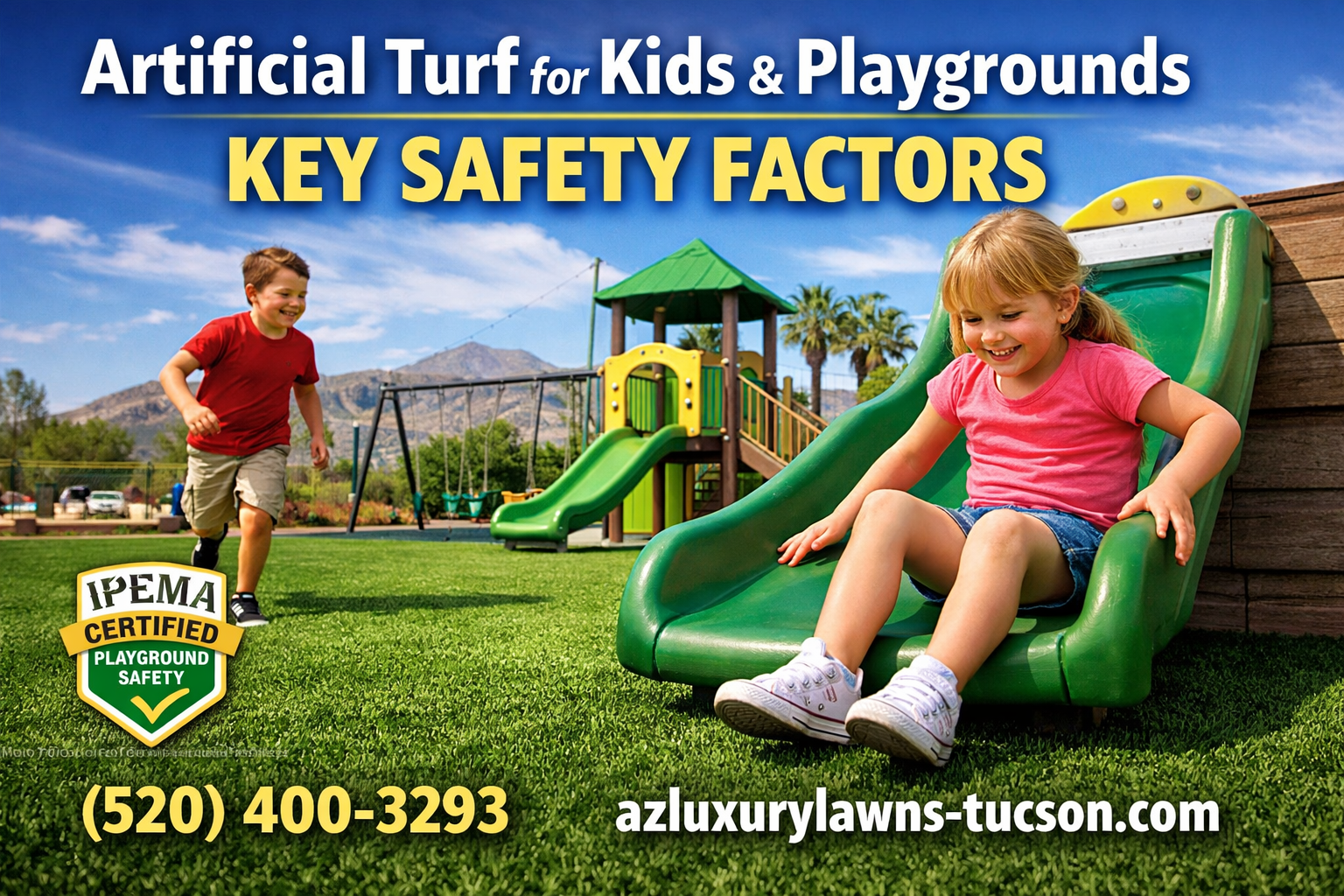

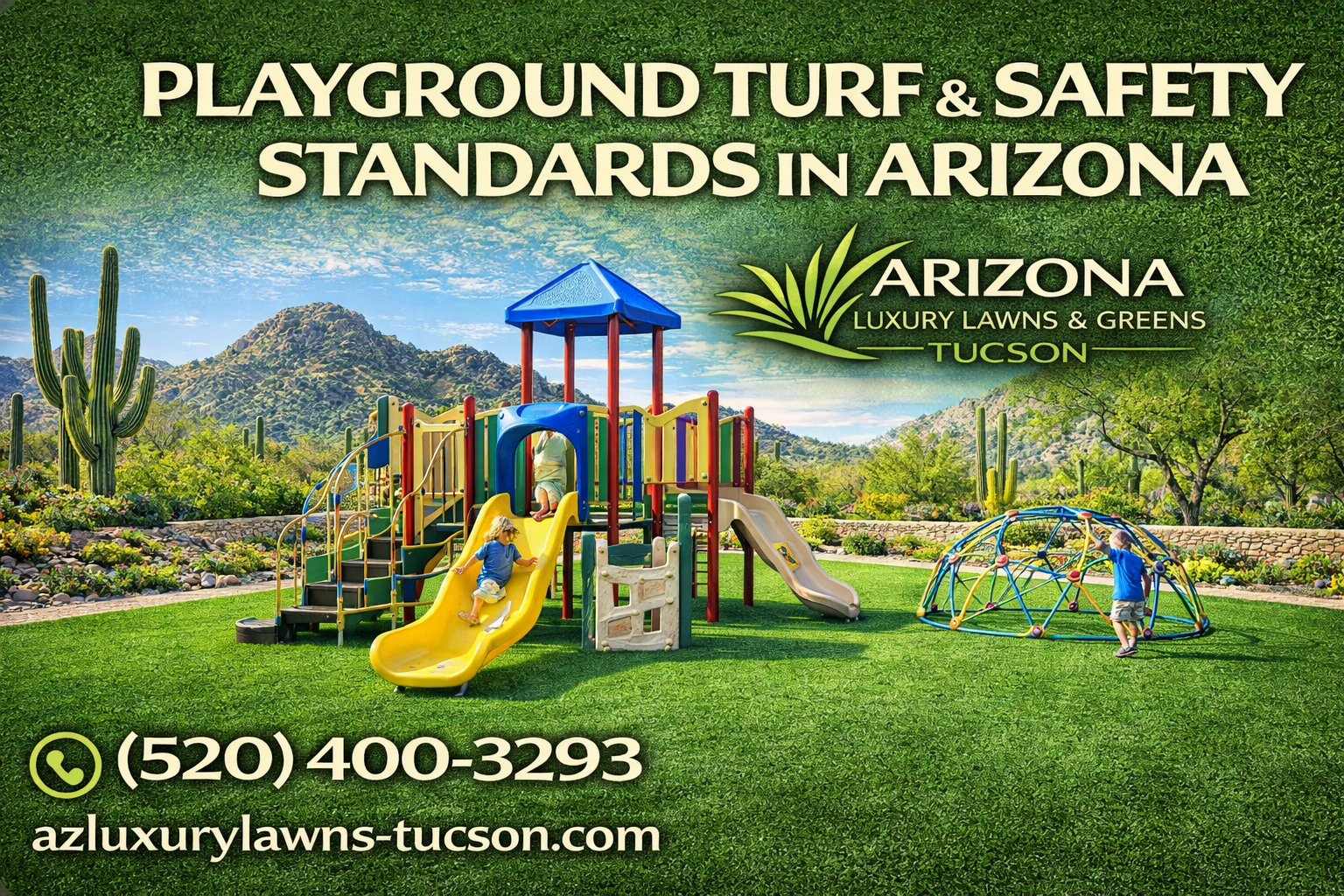
Artificial Turf for Kids and Playgrounds: Key Safety Factors
Not All Artificial Turf Is Safe for Playgrounds
When families, schools, and HOAs consider artificial turf for playgrounds, the focus is often on:
- Clean appearance
- Low maintenance
- Water savings
But the most important question is often overlooked - Is it actually safe for children? Because playground turf isn’t just landscaping - it’s a safety surface. And in Southern Arizona, safety isn’t just about softness - it’s about heat, impact protection, and long-term performance.
What Makes Playground Turf Different?
Playground turf systems are engineered differently than standard landscape turf. They are designed to:
- Absorb impact from falls
- Reduce injury risk
- Stay usable in high-traffic environments
- Meet safety standards
This is not just turf; it is a multi-layer safety system.
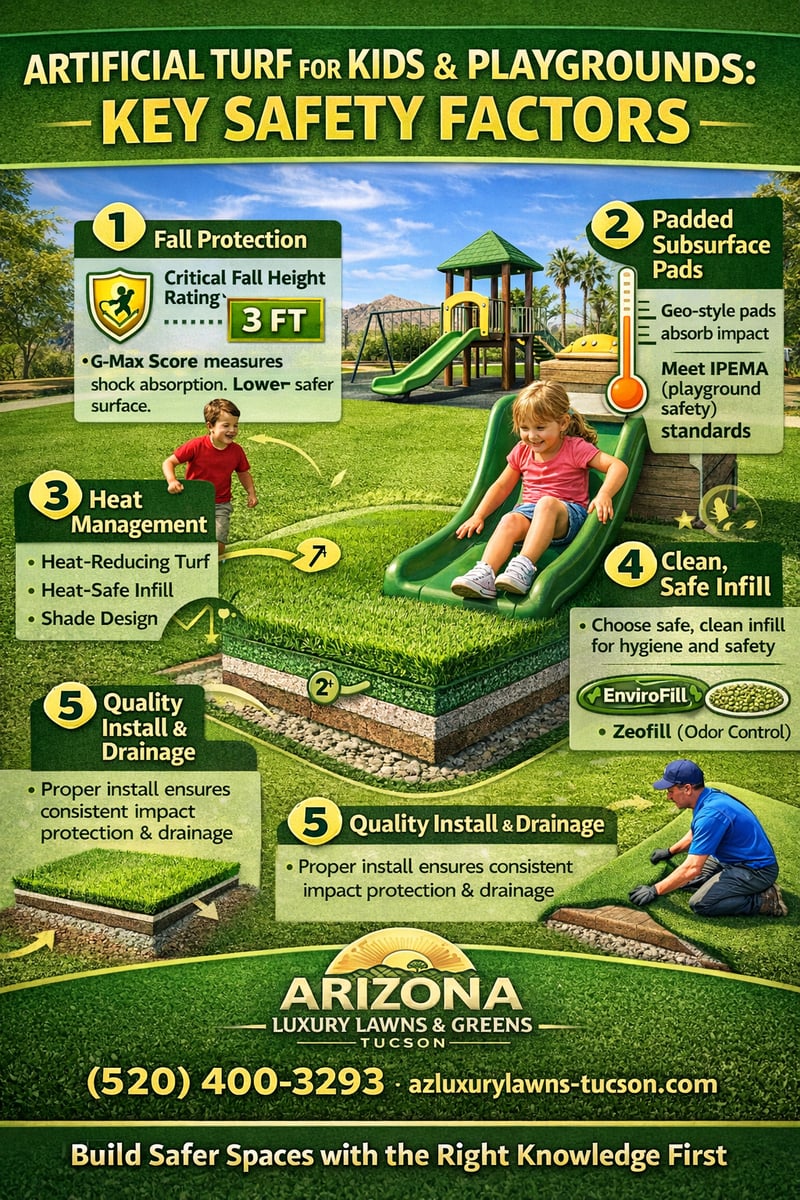
The 5 Key Safety Factors Every Parent Should Understand
1. Fall Protection (Critical Fall Height & G-Max Ratings)
The most important safety factor is impact attenuation or how well the surface absorbs a fall.
What to Look For:
- Critical Fall Height Rating (e.g., 5 ft, 8 ft, etc.)
- G-Max Score (measures impact force)
Lower G-Max = safer surface
Why It Matters:
Falls are the #1 cause of playground injuries. A properly designed turf system helps reduce:
- Head injuries
- Broken bones
- Serious impact trauma
2. Padded Subsurface (GeoFlo+ Play Pad)
Under playground turf, a shock-absorbing pad is installed. This is what actually provides protection, not the turf itself. Download your GeoFlo+ Play Pad factsheet.
High-Quality Systems Include:
- Engineered foam or rubber play pads
- Products designed to meet IPEMA standards
- Consistent thickness across the play area
Without a proper pad, turf is not a safe playground surface.
3. Heat Management in Arizona
In Southern Arizona's climate, surface temperature is a major safety concern. Artificial turf can get hot, especially in direct sun.
Factors That Affect Heat:
- Turf color and material
- Infill type
- Sun exposure
Best Practices:
- Use heat-reducing turf technologies (e.g., cooling yarns)
- Avoid heat-retaining infills (like crumb rubber)
- Design with shade (trees, structures, sails)
Safety isn’t just about falls; it is also about burn risk.
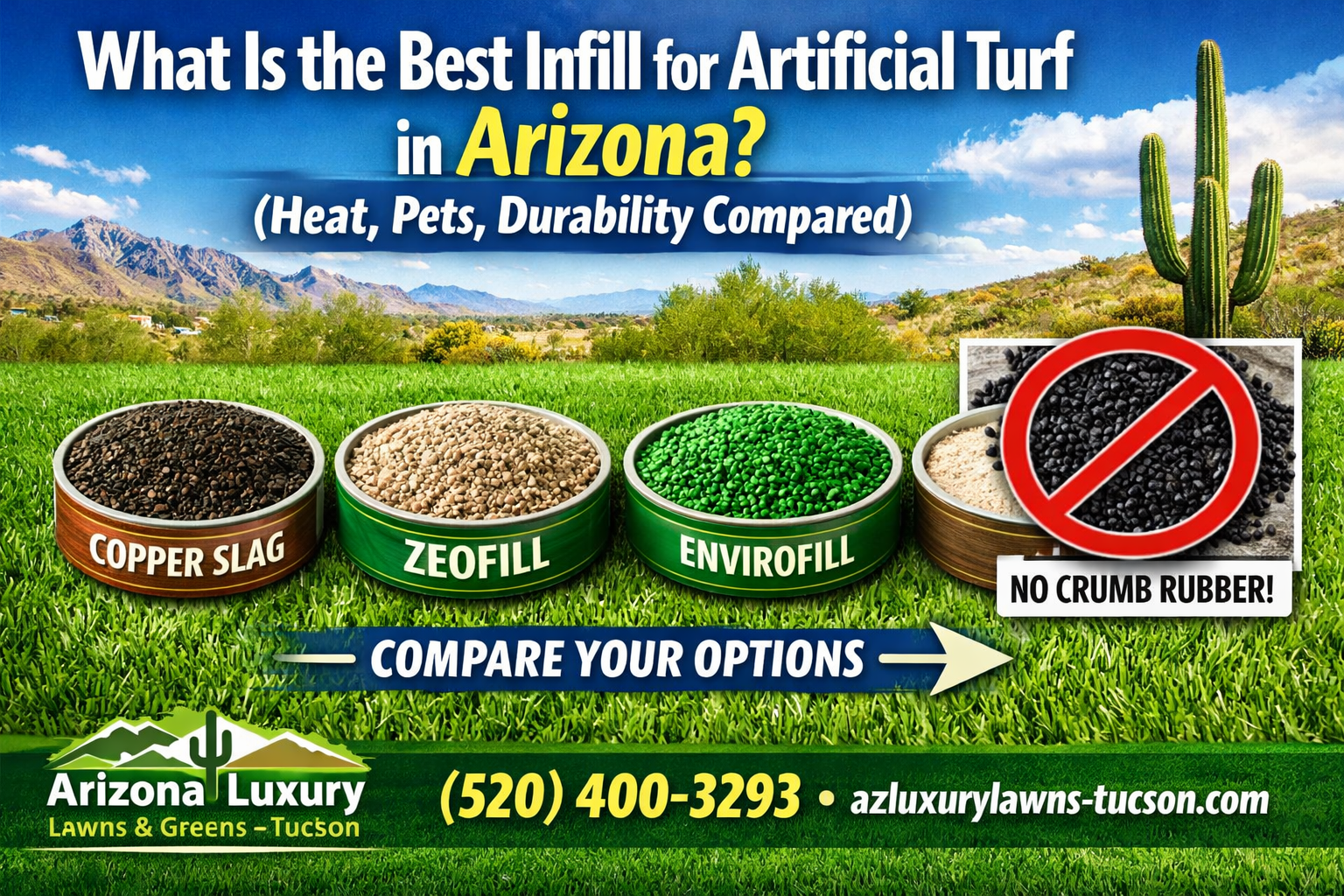
4. Infill Selection (Safety + Cleanliness)
Playground infill impacts:
- Hygiene
- Heat
- Safety
Recommended Options:
- EnviroFill → antimicrobial protection
- Zeofill → odor control
Avoid:
- Crumb rubber (heat + potential safety concerns)
Clean, safe infill matters, especially for younger children
5. Installation Quality & Drainage
Even the best materials can fail with poor installation.
Proper Installation Ensures:
- Consistent fall protection across the entire surface
- No hard spots or uneven areas
- Effective drainage to prevent pooling
Poor installation = hidden safety risks
Why IPEMA Certification Matters
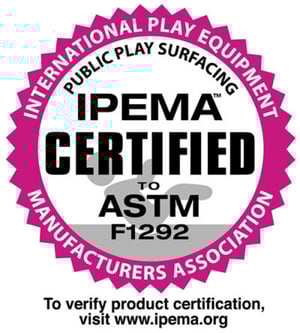
The International Play Equipment Manufacturers Association (IPEMA) sets safety standards for playground surfaces.
What This Means:
- Systems are tested for impact safety
- Materials meet recognized safety benchmarks
If a system isn’t designed to meet IPEMA standards, it may not provide adequate protection
Backyard vs School vs HOA Playgrounds
Not all playgrounds are the same - and safety requirements vary.
Backyard Playgrounds
- Lower fall heights
- Still strongly suggest GeoFlo+ Play Pad padded systems
- Focus on family safety
Schools & Daycares
- Strict safety requirements
- Must meet higher fall height ratings
- Require professional design and installation
HOA & Community Playgrounds
- High traffic
- Durability + safety both critical
- Long-term performance matters
Common Mistakes Homeowners & Communities Make
The International Play Equipment Manufacturers Association (IPEMA) sets safety standards for playground surfaces.
- Installing standard turf instead of playground turf
- Skipping the padded sub-base
- Choosing materials based on price
- Ignoring heat in Arizona climate
These mistakes can lead to:
- Increased injury risk
- Premature failure
- Liability concerns
The Arizona Reality: Safety Is a System, Not a Product
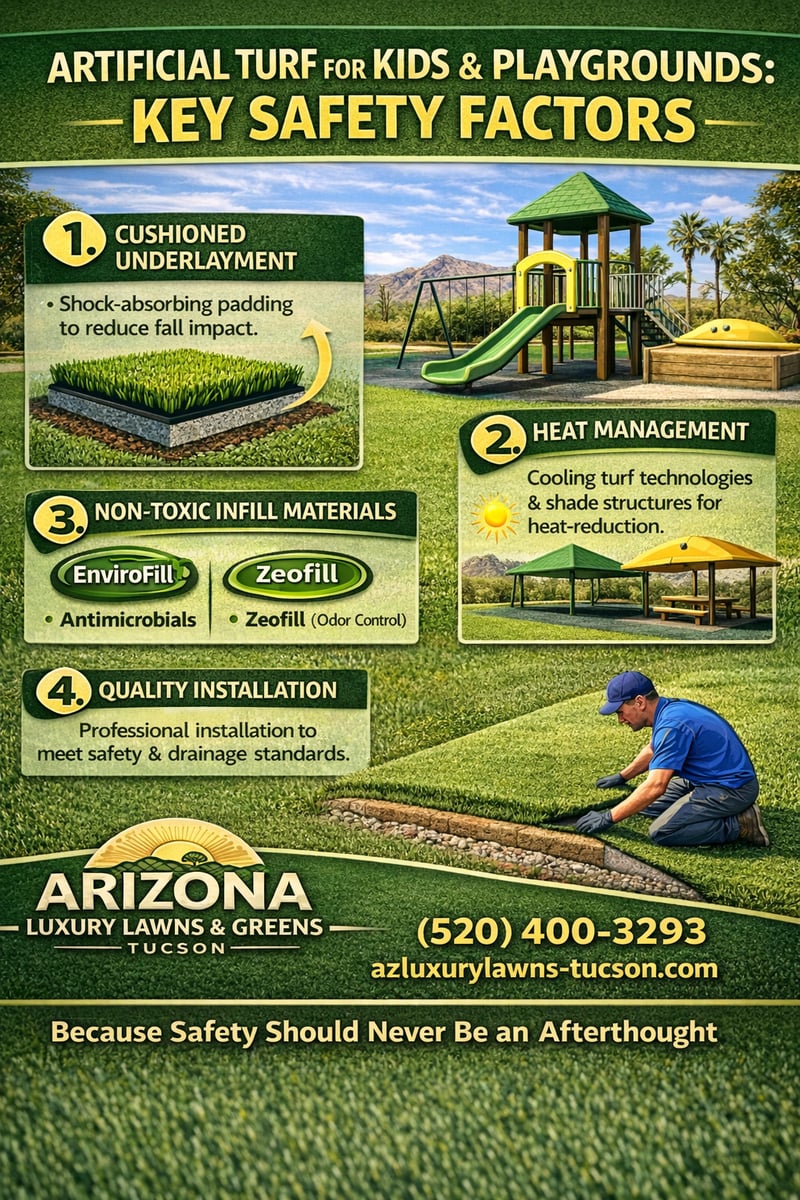
Playground turf is not just about what you see on the surface. It’s about how the entire system works together:
- Turf fibers
- Infill
- Padding
- Base preparation
- Installation quality
The Investment Mindset
A safe playground is not an expense, it is a long-term investment in safety, usability, and peace of mind. Choosing the right system helps ensure:
- Children can play safely
- Surfaces perform in Arizona's climate and heat
- Installations last for years
Final Thoughts: What Should You Prioritize?
If you’re considering artificial turf for a playground, prioritize:
- Fall protection (G-Max / fall height)
- GeoFlo+ Play Pad padded subsurface system
- Heat-conscious design (Designed for Arizona's Climate)
- Safe, appropriate infill
- Professional installation
Everything else comes second.
FAQs: Playground Artificial Turf Safety
1. Is artificial turf safe for playgrounds and children?
Yes, when properly designed and installed, playground artificial turf can be a safe and reliable playground surface. The key is using a complete system, including a padded subsurface, appropriate infill, and licensed professional installation to ensure proper fall protection and long-term performance.
2. What is the most important safety feature for playground turf?
The most critical factor is fall protection, measured by critical fall height and G-Max ratings. A properly designed, engineered and installed playground solution helps absorb impact and reduce the risk of injuries from falls, which are the most common playground accidents.
3. Do you need a pad under artificial turf for playgrounds?
Yes. A shock-absorbing pad (such as a GeoFlo+ Play Pad) is essential for safety. The turf alone does not provide adequate impact protection - without a proper pad, the surface may not meet safety standards.
4. Does artificial turf get too hot for kids in Arizona?
Artificial turf can get hot in direct sunlight, especially in Arizona’s climate. However, heat can be managed through:
- Cooling turf technologies (Cool Yarn Technology)
- Proper infill selection (avoiding heat-retaining materials)
- Shade structures or landscaping
A well-designed system helps keep surfaces safer and more usable
5. What type of infill is safest for playground turf?
Safer artificial turf infill options include EnviroFill (antimicrobial) and Zeofill (odor control). These help maintain a cleaner, more hygienic surface. Materials like crumb rubber are generally discouraged due to heat retention and other health concerns.