


The 7 Factors That Determine Artificial Turf Quality
What Homeowners in Southern Arizona Should Understand Before Investing in Turf
Artificial turf has become one of the most popular landscape upgrades across Southern Arizona. From Tucson, Oro Valley, Marana, Sahuarita, Green Valley, Amado, Casa Grande, Florence, Eloy, Arizona City, Red Rock, Tubac, Rio Rico, Sierra Vista, Huachuca City, Benson, Vail, Corona de Tucson, Oracle, San Manuel, and surrounding communities, more homeowners and businesses are choosing synthetic grass for its water savings, durability, and year-round beauty.
But not all artificial turf is created equal.
To the untrained eye, many turf products look similar. However, the long-term performance, appearance, and durability of artificial turf products are determined by several critical factors that are often overlooked during the buying process.
Understanding these factors can help homeowners avoid costly mistakes and ensure their landscape investment performs beautifully for years to come.
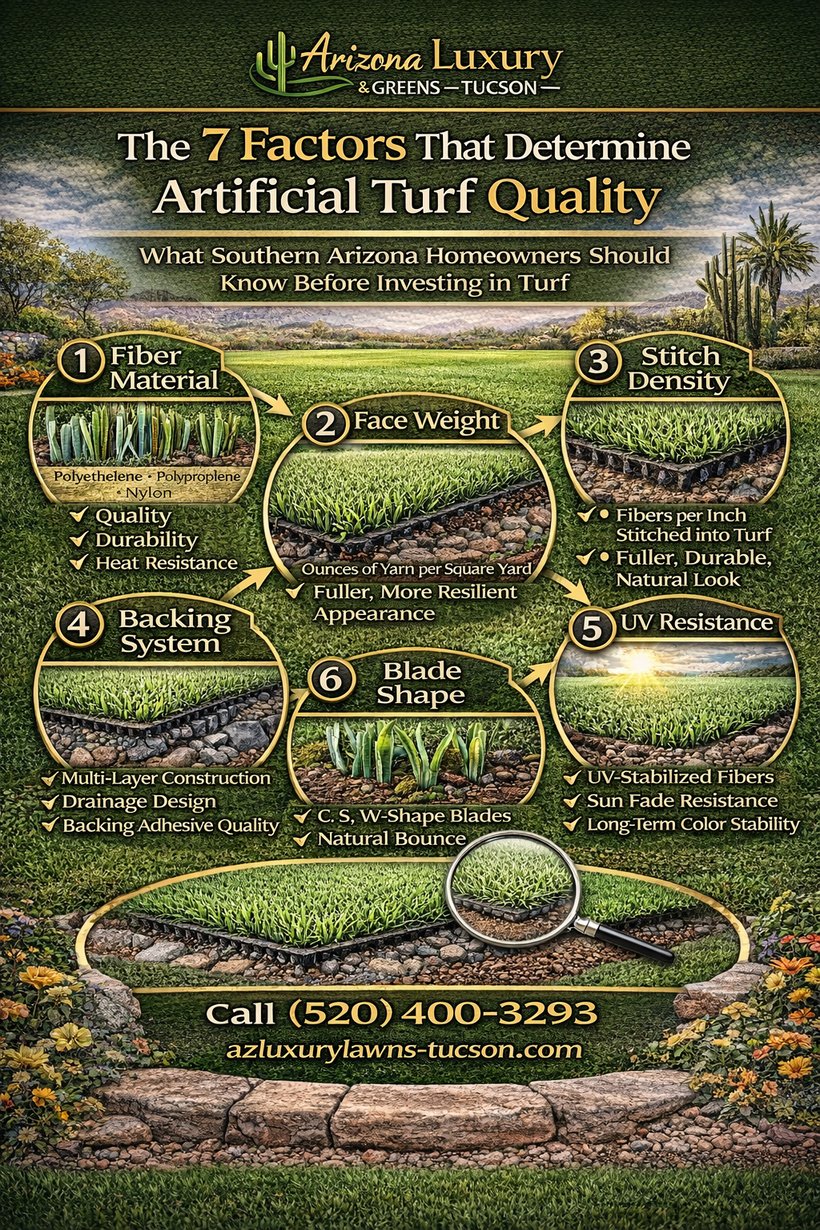
Today we will explore the seven most important factors that determine artificial turf quality.
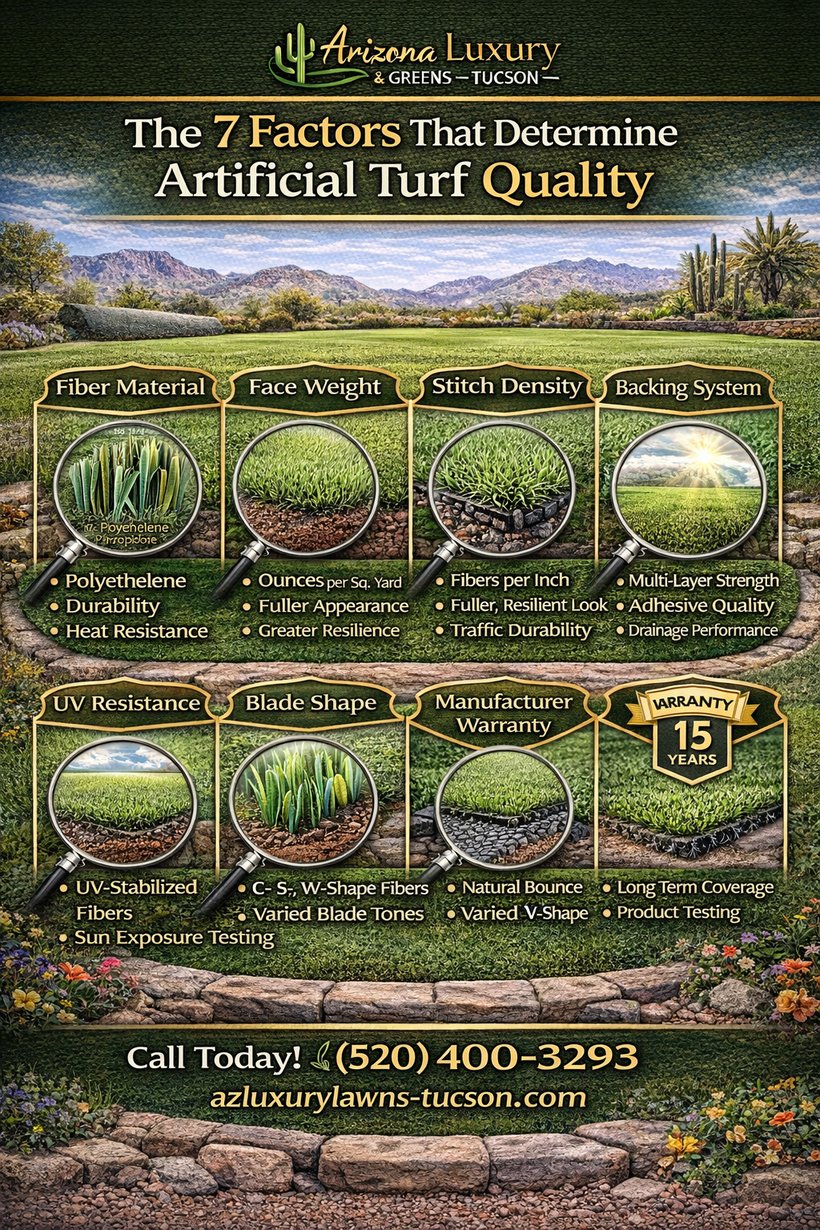
Fiber Material & Composition
One of the biggest indicators of turf quality is the type of material used to manufacture the turf fibers. Most modern artificial turf products are made from:
- Polyethylene – Soft, realistic appearance commonly used for residential landscapes
- Polypropylene – Less expensive but typically less durable
- Nylon – Extremely durable but often stiffer and more expensive
High-quality landscape turf products typically use advanced polyethylene blends designed to balance softness, durability, and heat resistance.
Premium turf manufacturers also engineer their fibers to withstand:
- Intense UV exposure
- Extreme desert temperatures
- Long-term foot traffic
In Southern Arizona’s climate, fiber durability is critical for longevity.
Face Weight (Ounces per Square Yard)
Face weight refers to how much yarn is used in the turf product, typically measured in ounces per square yard. In general:
- 60–70 oz - Mid-grade turf
- 75+ oz - Premium turf
Higher face weight typically means:
- Fuller appearance
- Greater durability
- Better resilience under foot traffic
However, face weight alone does not determine quality. It must be considered together with other factors such as fiber technology and backing construction.
Stitch Rate & Density
Another key factor in turf quality is how tightly the fibers are stitched into the backing. Higher stitch density provides:
- A fuller, more natural look
- Improved durability
- Better resistance to matting
Low-density turf often appears flat or thin over time, particularly in high-traffic areas. High-quality turf products use advanced tufting techniques that maximize fiber density while maintaining realistic aesthetics.
Backing System Strength
The backing system holds the turf fibers in place and provides structural stability. A strong backing system typically includes:
- Primary backing - Holds the stitched fibers
- Secondary backing - Provides structural reinforcement
- Polyurethane or latex coatings - Lock fibers into place
Higher-quality turf systems use multiple-layer backings designed to withstand heat expansion, moisture exposure, and long-term use.
Poor backing systems can lead to:
- Fiber loss
- Seam separation
- Premature turf failure
UV Resistance
Southern Arizona receives some of the most intense sunlight in the United States. Artificial turf must be engineered with UV stabilizers to prevent:
- Fading
- Fiber brittleness
- Material degradation
Premium turf manufacturers conduct accelerated UV testing to simulate years of desert sun exposure. This ensures the turf maintains its color and structural integrity over time.
Blade Shape & Technology
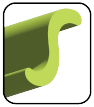
Modern artificial turf fibers are engineered using advanced blade shapes designed to improve resilience. Common blade designs include:
- C-shape fibers
- S-shape fibers
- W-shape fibers
- Diamond-shaped fibers
These shapes help turf blades bounce back after foot traffic, keeping the surface upright and natural looking. Higher-quality turf products often combine multiple blade shapes and color tones to mimic natural grass more effectively.



Manufacturer Warranty & Product Testing
A strong manufacturer warranty often reflects confidence in the product’s durability. Quality turf products commonly offer:
- 15-year manufacturer warranties
- UV protection guarantees
- Fiber integrity coverage
Additionally, reputable turf manufacturers perform extensive testing for:
- UV resistance
- Tensile strength
- Drainage performance
- Fire resistance
- Lead-free safety standards
- PFAS-free safety standards
Choosing turf from established manufacturers helps ensure consistent quality and long-term reliability.
Why Turf Quality Matters in Southern Arizona
Artificial turf installations in Southern Arizona face unique environmental challenges, including:
- Extreme summer temperatures
- Monsoon storms and heavy rainfall
- High UV exposure
- Dust and debris accumulation
Lower-quality turf products may initially look attractive, but over time they often develop problems such as:
- Matting
- Fiber breakdown
- Fading
- Poor drainage
- Premature wear
Investing in high-quality turf materials combined with professional installation standards helps ensure the landscape performs as expected for many years.
Quality Turf Is Only Half the Equation
Even the best turf product can fail if installation shortcuts are taken. Professional installation requires:
- Proper base preparation
- Compaction and grading
- Monsoon-ready drainage planning
- Precision seam construction
- Secure edge restraints
The combination of high-quality materials and professional installation standards ultimately determines the long-term success of an artificial turf project.
Final Thoughts
Artificial turf can transform outdoor spaces across Southern Arizona, creating landscapes that stay green, beautiful, and water-efficient year-round.
However, understanding what determines turf quality is essential for making an informed decision.
By focusing on factors such as fiber technology, density, backing systems, UV resistance, and manufacturer testing, homeowners and businesses can choose turf products that deliver lasting performance.
When installed correctly, high-quality artificial turf can provide 15–20 years of reliable beauty and functionality.