
The Problem Most Homeowners Don’t See Coming | What Causes Artificial Turf to Melt or Discolor? | Why This Matters in Southern Arizona | How to Identify a Reflection Risk Before It Becomes a Problem | The #1 Solution: Solar Window Screens | Additional Prevention Strategies | What This Says About Choosing the Right Turf Company | Our Approach: Protecting Your Investment from Day One | Final Thoughts: A Small Detail That Makes a Big Difference
See Also (downloadable brochure): Reflecting on your New Synthetic Lawn.pdf


Reflecting on Your New Synthetic Lawn: The Hidden Risk Most Homeowners Miss
How Window Reflections Can Damage Artificial Turf - and How to Prevent It
Introduction: The Problem Most Homeowners Don’t See Coming
You’ve invested in a beautiful artificial lawn. It looks perfect. It’s low maintenance. It’s built to last in Southern Arizona’s extreme climate. But then, weeks or months later, you notice something unexpected:
- Small shiny patches
- Turf fibers that look melted or flattened
- Discoloration that wasn’t there before
What happened?
In many cases, it’s not the turf. It’s not the installation. It’s something most homeowners never think about - window reflection and concentrated solar heat.
What Causes Artificial Turf to Melt or Discolor?
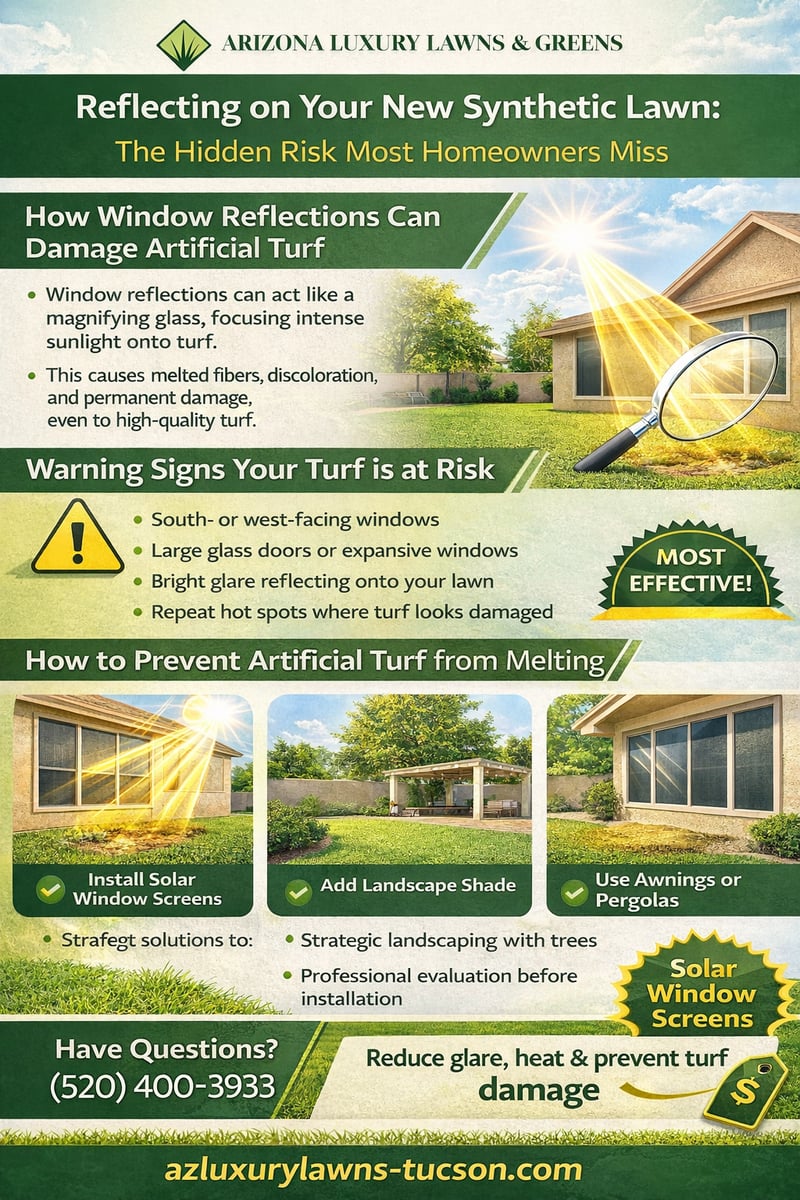
Premium artificial turf is designed to withstand intense UV exposure - even in 110°+ Arizona summers. But there’s a critical difference between direct sunlight and reflected, concentrated sunlight.
The Real Issue: Magnified Heat
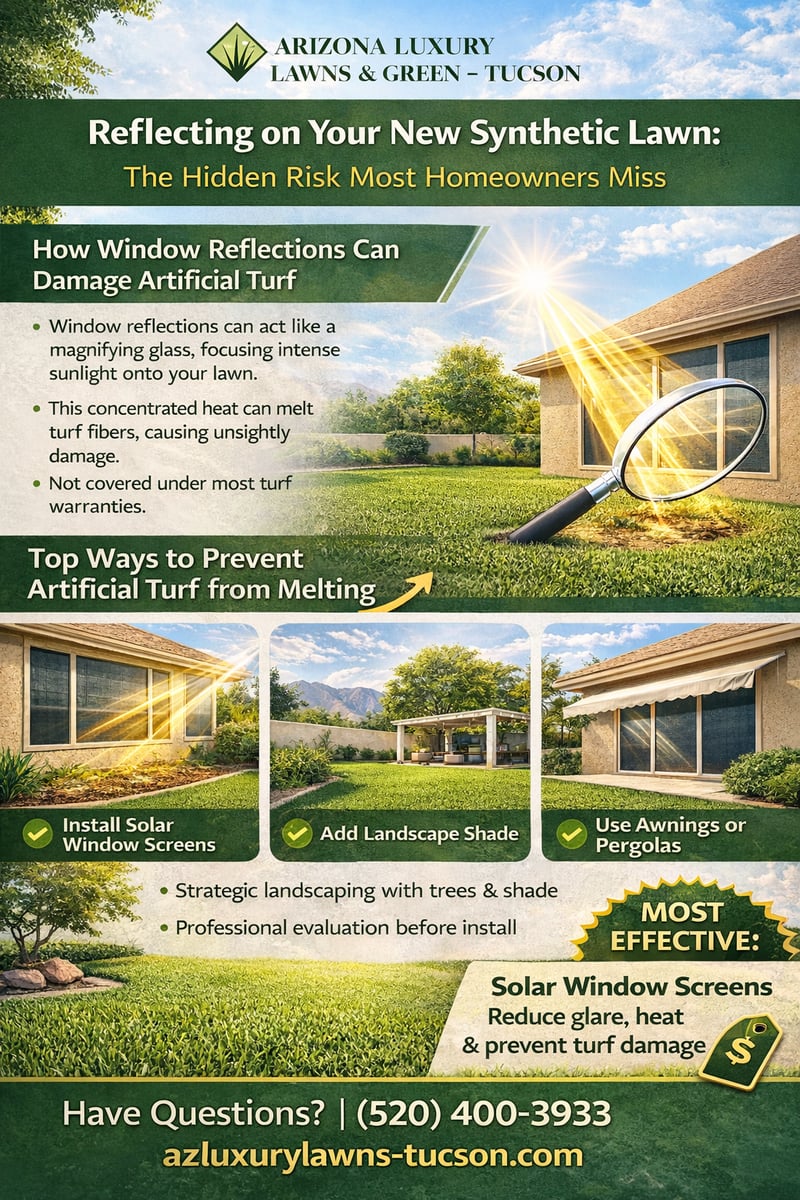
Modern windows, especially energy-efficient, low-E glass, can reflect and concentrate sunlight onto specific areas of your yard. This creates:
- Hot spots significantly hotter than ambient temperatures
- Focused heat similar to a magnifying glass effect
- Localized temperatures high enough to damage turf fibers
- Over time, they can cause uneven wear and discoloration
Why This Matters in Southern Arizona
This issue is especially common in our region because of:
- Intense year-round sun exposure
- Reflective building materials (windows, sliders, glass doors)
- Compact backyard layouts where reflections are concentrated
Even the highest-quality turf with advanced UV protection like TenCate technology is not immune to reflection-based heat damage. And to make the situation worse, melting caused by window reflection is not covered under manufacturer warranties.
How to Identify a Reflection Risk Before It Becomes a Problem
Most homeowners don’t notice reflection patterns until damage has already occurred. Here’s what to look for:
- Signs of Potential Risk
- South- or west-facing windows overlooking turf areas
- Large glass doors or multiple window panels
- Bright glare reflecting onto the same spot daily
- Turf areas near walls that intensify heat
Simple Test
Stand in your yard during peak sun hours (midday to late afternoon):
- If you see intense glare or bright reflection on the turf, that area is at risk.
The #1 Solution: Solar Window Screens
The most effective and proven solution is: Installing Solar Window Screens
Why They Work
Solar screens reduce:
- Heat transfer
- Light intensity
- Reflective glare
This prevents concentrated sunlight from reaching temperatures that can damage your turf and act as a protective barrier between your windows and your lawn.
Additional Prevention Strategies
While solar screens are the primary solution, you can also layer protection:
1. Strategic Shade Elements
- Pergolas
- Trees
- Awnings
These help block or diffuse reflected sunlight.
2. Smart Landscape Design
Position turf areas to minimize direct reflection exposure when possible.
3. Professional Site Evaluation
A licensed professional installer should:
- Evaluate reflection angles during consultation
- Identify high-risk zones before installation
- Recommend preventative solutions upfront
What This Says About Choosing the Right Turf Company
This is where experience and integrity matter. Most companies focus only on:
- Price per square foot
- Turf selection
But professionals understand:
- Artificial turf is an outdoor system, not just an artificial turf product
And complete and comprehensive solution requires:
- Environmental analysis
- Heat mapping considerations
- Long-term performance planning
This is exactly why we educate homeowners through resources like:
- Don’t Choose Your Turf Company Based on Price Alone
- Licensed vs Unlicensed Turf Installers in Arizona
- Why Integrity Matters in the Artificial Turf Industry
Because details like this are what separate a beautiful lawn that lasts from one that fails prematurely.
Our Approach: Protecting Your Investment from Day One
At Arizona Luxury Lawns & Greens - Tucson, we take a proactive approach:
- Evaluate window reflections during site visits
- Identify potential hot spots before installation
- Recommend solar screens when needed
- Design systems built for Southern Arizona conditions
Our goal isn’t just to install turf. The goal is to ensure your investment performs for years - not months.
Final Thoughts: A Small Detail That Makes a Big Difference
Window reflection damage is one of the most overlooked risks with any artificial turf project. But the good news is - It’s completely preventable.
With the right awareness, and the right partner, you can protect your lawn and enjoy everything artificial turf is meant to deliver:
- Long-term beauty
- Consistent performance
- Peace of mind
FAQs: Artificial Turf & Window Reflections
1. Can window reflections really melt artificial turf?
Yes, window reflections can absolutely melt artificial turf. Modern windows (especially low-E glass) can reflect and concentrate sunlight, creating extreme heat “hot spots” that exceed what turf is designed to handle. This can lead to:
- Melted or deformed fibers
- Discoloration
- Permanent damage
Even high-quality turf is vulnerable to concentrated reflected heat, not just direct sunlight.
2. Why does artificial turf melt if it’s designed for Arizona heat?
Artificial turf is engineered to withstand direct UV exposure and high ambient temperatures. However, window reflections create:
- Focused, amplified heat (like a magnifying glass effect)
This concentrated heat can reach temperatures significantly higher than normal outdoor conditions, enough to damage turf fibers.
3. How do I know if my yard is at risk for turf damage from reflections?
You may be at risk if your property has:
- South- or west-facing windows
- Large glass doors or multiple window panels
- Visible glare reflecting onto your lawn during the day
- Repeated bright “hot spots” in the same area
A simple test: Stand outside during peak sunlight hours—if you see intense reflection on your turf, it’s a potential risk.
4. What is the best way to prevent artificial turf from melting?
The most effective solution is...Installing solar window screens.
Solar screens help:
- Reduce heat transfer
- Minimize glare and reflection
- Protect turf from concentrated sunlight
Additional solutions include:
- Pergolas or shade structures
- Strategic landscaping (trees, awnings)
- Professional site evaluation before installation
5. Is melting from window reflection covered under warranty?4. What is the best way to prevent artificial turf from melting?
In most cases, no. Artificial turf warranties typically cover manufacturing defects and UV degradation, but:
- Damage caused by window reflections is not covered
This is why proper planning and prevention, like installing solar screens, is critical to protecting your investment.