
What Is the Best Infill for Artificial Turf? | What Is Infill & Why Does It Matter? | Why Infill Selection Matters More in Arizona | Top Artificial Turf Infill Options | Why Many Professionals Prefer Copper Slag | Why Crumb Rubber Infill Is Strongly Discouraged | Heat Comparison: What Homeowners Should Know | Pet Considerations: Choosing the Right Infill | Durability & Longevity Comparison | The Arizona Reality: No One-Size-Fits-All Solution | Best Infill Recommendations by Use Case | Common Mistakes Homeowners Make | The Investment Mindset | Final Thoughts: What Is the Best Infill for Arizona?
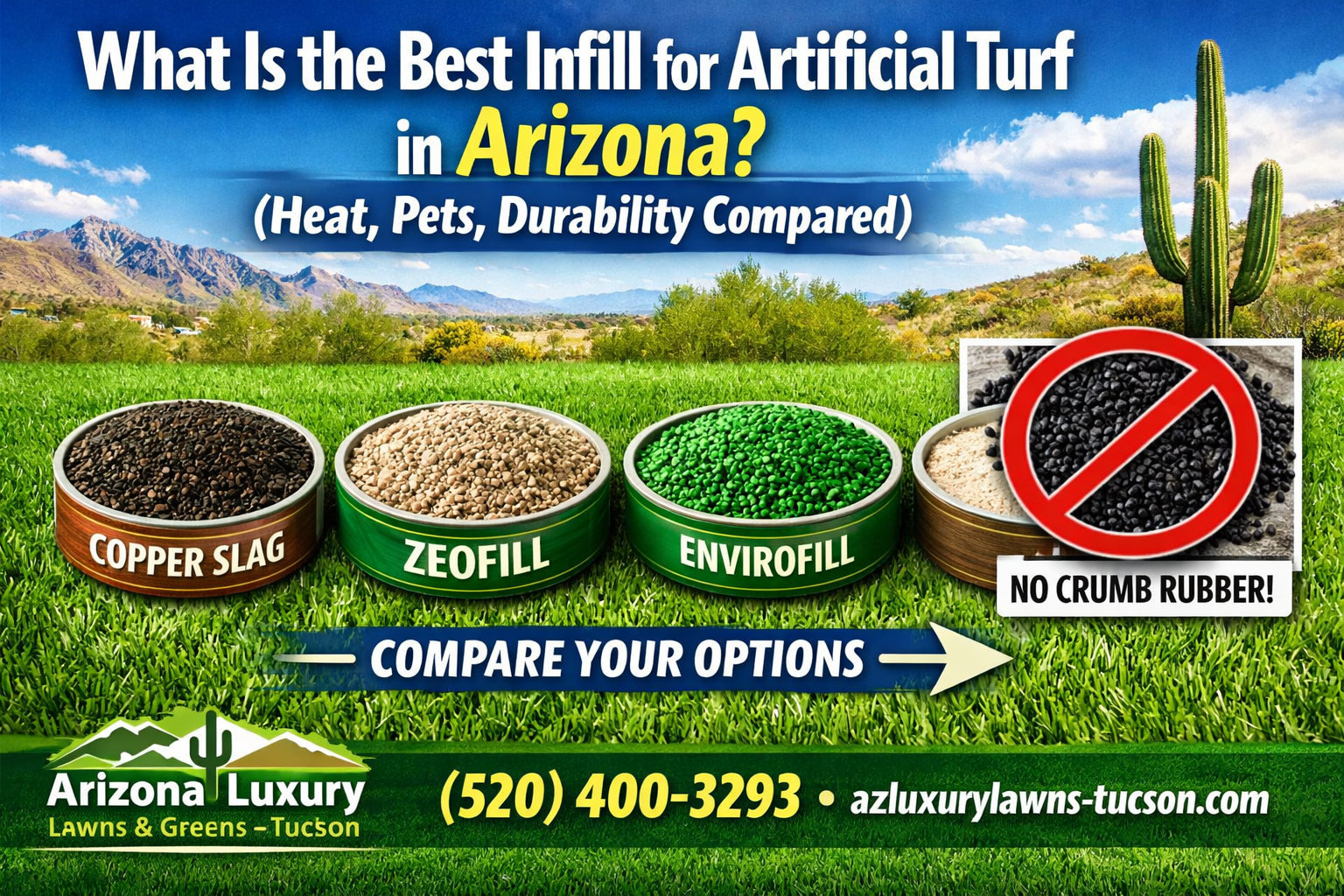

What Is the Best Infill for Artificial Turf in Arizona? (Heat, Pets, Durability Compared)
The Most Overlooked Decision in Artificial Turf
When homeowners evaluate artificial turf, they often focus on:
- Turf appearance
- Price per square foot
- Installation timeline
But one of the most important and most overlooked, components is Infill. Because infill doesn’t just support your turf…It directly impacts heat, durability, drainage, cleanliness, and long-term performance, especially in Arizona.
What Is Infill & Why Does It Matter?
Infill is the material placed between turf fibers to:
- Provide stability and weight
- Help blades stay upright
- Improve drainage
- Enhance durability and lifespan
Without the right infill, even premium turf systems can underperform.
Why Infill Selection Matters More in Arizona
Southern Arizona presents unique conditions:
- Extreme summer heat
- Intense UV exposure
- Dust and debris
- Pet usage challenges
The wrong infill can lead to:
- Excessive surface temperatures
- Odor buildup
- Compaction and flattening
- Reduced lifespan
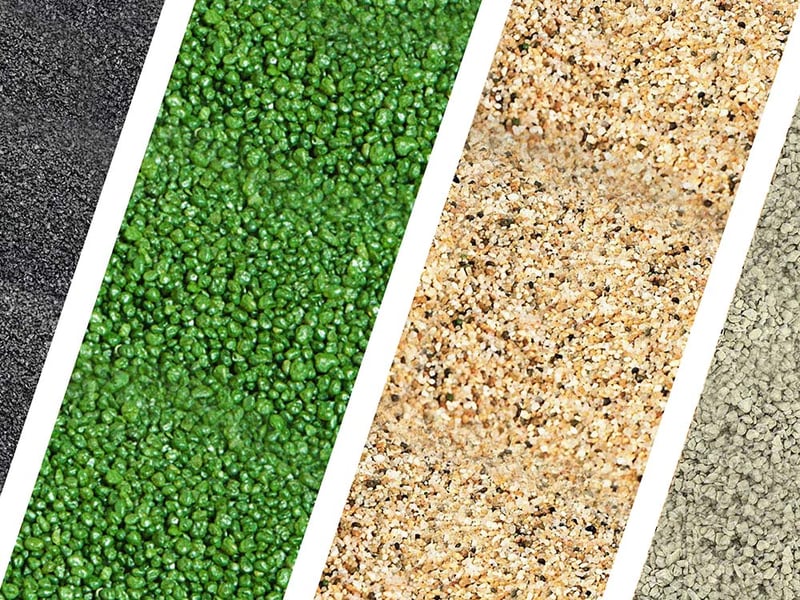
Top Artificial Turf Infill Options
1. Silica Sand (Traditional Standard)
Pros
- Cost-effective and widely available
- Provides consistent stability
- Works well for general applications
Cons
- Retains heat
- No odor control
- Can compact over time
Best for: Budget-conscious installations
2. Zeofill (Zeolite-Based Infill)
Pros
- Excellent odor control for pet use
- Absorbs ammonia effectively
- Natural mineral composition
Cons
- Higher cost
- Requires occasional maintenance (rinsing)odor control
Best for: Pet-focused environments
3. EnviroFill (Antimicrobial Coated Sand)
Pros
- Built-in antimicrobial protection
- Helps reduce bacteria and odors
- Consistent performance
Cons
- Premium price
- Moderate heat retention
Best for: Cleanliness and hygiene priorities
4. Copper Slag (High-Performance, Contractor-Preferred Option)
Copper slag is often overlooked in general consumer conversations - but among experienced installers, it is increasingly recognized as a high-performance infill option for Arizona conditions.
Pros
- Excellent drainage performance due to angular particle structure
- Highly durable and resistant to compaction
- Provides strong blade support, helping turf maintain a natural upright appearance
- Less dust migration compared to lighter materials
- Consistent long-term performance in high-use areas
Cons
- Darker color can retain more heat than lighter infills
- Requires proper installation and system design to maximize benefits
Best for: Cleanliness and hygiene priorities
- High-traffic areas
- Homeowners prioritizing durability and long-term performance
- Projects where structural integrity and drainage are critical
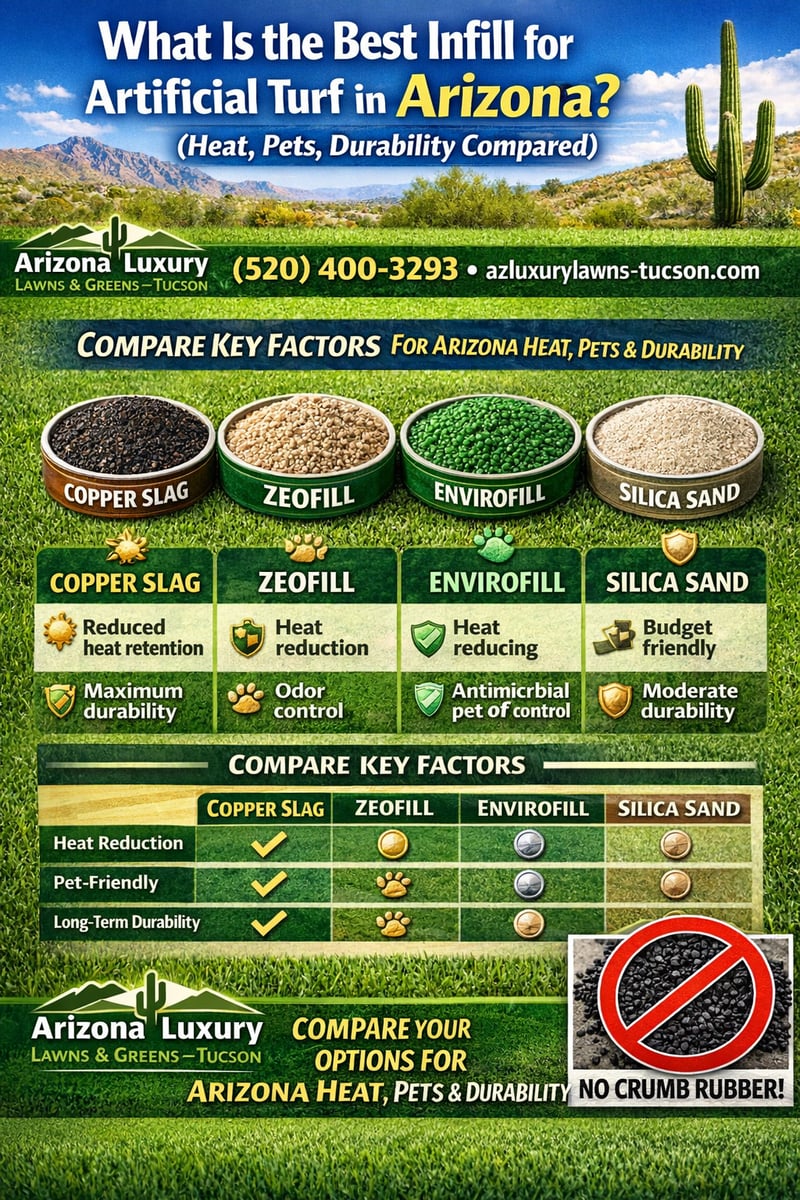
Why Many Professionals Prefer Copper Slag
In real-world installations across Southern Arizona:
- Drainage and base stability are often more critical than minor heat differences
- Turf systems fail more often from poor support and compaction than from infill type alone
Copper slag addresses these issues by delivering:
- Strong structural support
- Reliable drainage
- Long-term consistency
When installed correctly as part of a complete system, it can outperform many traditional infill options.
Why Crumb Rubber Infill Is Strongly Discouraged
Crumb rubber (recycled tire material) is not recommended for residential turf in Arizona. Major Concerns:
- Extreme heat retention (can become dangerously hot)
- Chemical concerns from recycled materials
- Strong odor in high temperatures
- Poor fit for residential applications
In Southern Arizona, crumb rubber can make turf surfaces uncomfortable or unusable during peak heat.
Heat Comparison: What Homeowners Should Know
| Infill Type | Heat Retention | Arizona Suitability |
| Silica Sand | Moderate to High | Acceptable |
| Zeofill | Moderate | Good |
| Envirofill | Moderate | Good |
| Copper Slag | Moderate to High | Strong (with proper design) |
| Crumb Rubber | Very High | Not Recommended |
Pet Considerations: Choosing the Right Infill
Best Options for Pets:
- Zeofill → superior odor control
- EnviroFill → antimicrobial protection
Copper Slag for Pets:
- Works well when paired with:
- Proper drainage system
- Routine rinsing
- Zeofill or Envirofill inclusion
Odor control is more about system design + maintenance than infill alone.
Durability & Longevity Comparison
| Infill Type | Durability | Maintenance Needs |
| Silica Sand | Good | Moderate |
| Zeofill | Good | Moderate |
| Envirofill | Very Good | Low |
| Copper Slag | Excellent | Low |
| Crumb Rubber | Not Recommended | Not Recommended |
The Arizona Reality: No One-Size-Fits-All Solution
The best infill depends on:
- Usage (pets, play, aesthetics)
- Performance expectations
- Budget
- Climate considerations
The key is choosing the right system—not just the right material.
Best Infill Recommendations by Use Case
- Pet Owners: Zeofill or EnviroFill
- High-Traffic: Copper Slag (top-tier durability choice)
- Performance Areas: Copper Slag (top-tier durability choice)
- Budget Projects: Silica Sand
- Heat Sensitive Areas: Lighter infills or shaded designs
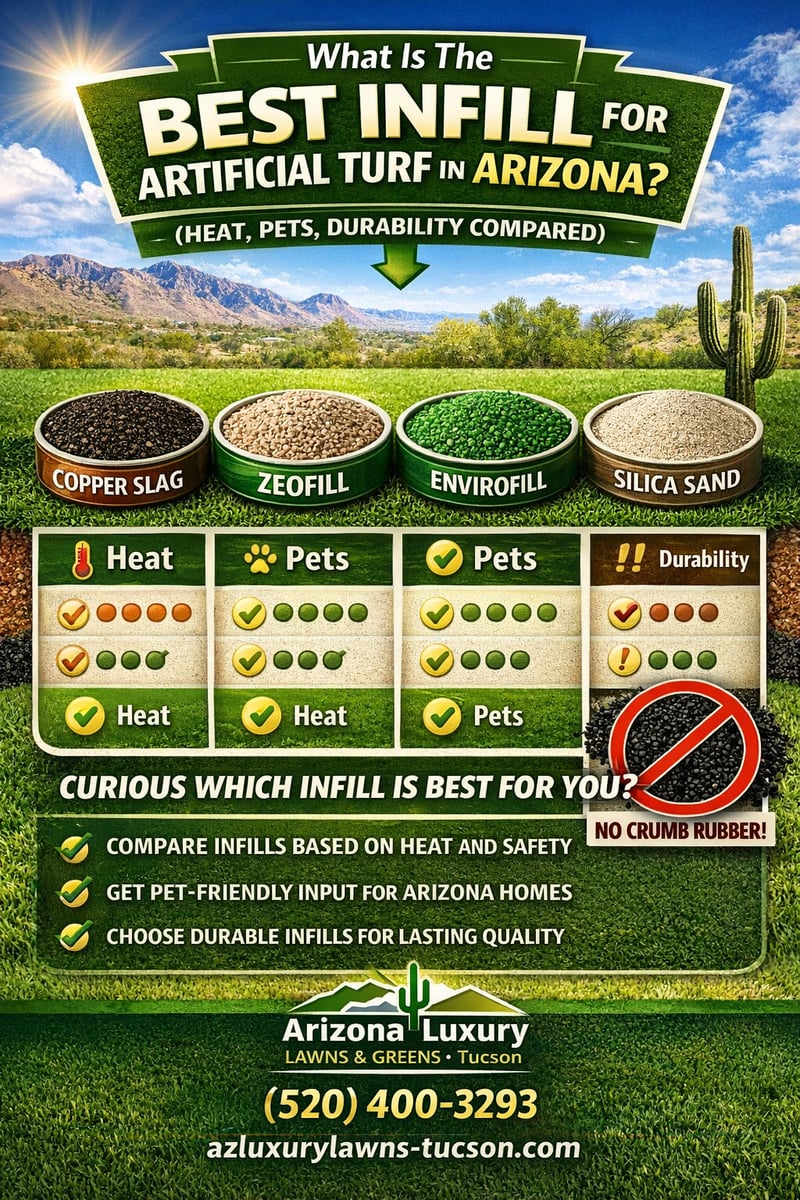
Common Mistakes Homeowners Make
- Ignoring infill entirely
- Choosing based on price alone
- Not matching infill to usage
- Overlooking Arizona-specific conditions
These mistakes often lead to
- Poor performance
- Premature wear
- Higher long-term costs
The Investment Mindset
Artificial turf is not just a product; it is a system. And infill is one of the most important components of that system. The correctly chosen infill will:
- Extends lifespan
- Improves performance
- Protects your investment
Final Thoughts: What Is the Best Infill for Arizona?
There is no universal “best” infill—but there is a best for your goals. In general:
- Copper Slag → Best for durability, structure, and long-term performance
- Zeofill / EnviroFill → Best for pet applications
- Silica Sand → Budget option
- Crumb Rubber → Avoid in Arizona
FAQs: Artificial Turf Infill in Tucson and Southern Arizona
1. What is the best infill for artificial turf in Arizona?
The best infill depends on your priorities. Copper slag is a top choice for durability and drainage, while Zeofill and EnviroFill are excellent for pet-friendly applications. Silica sand is a budget option, but performance varies based on usage and climate.
2. Does infill affect how hot artificial turf gets in Arizona?
Yes. Infill plays a role in heat retention, but it’s only one factor. Turf color, sun exposure, and airflow also impact temperature. Darker infills like copper slag can retain more heat, but proper artificial turf solution design and installation help manage overall surface temperature.
3. What is the best artificial turf infill for pets?
For pet owners, Zeofill and EnviroFill are typically the best options because they help control odors and bacteria. Copper slag can still perform well in pet areas when paired with proper drainage and routine maintenance.
4. Why is crumb rubber infill not recommended in Arizona?
Crumb rubber is strongly discouraged because it retains extreme heat, can produce unpleasant odors, and may raise health and environmental concerns. In Arizona’s climate, it can make turf surfaces uncomfortable or unusable during hot months.
5. Does infill impact the lifespan of artificial turf?
Absolutely. Infill supports the turf fibers, improves stability, and helps prevent premature wear. High-quality infill like copper slag or EnviroFill can significantly extend the life of your turf when installed correctly.
6. Is copper slag safe for artificial turf?
Yes. Copper slag is a stable, inert byproduct of the copper refining process and is widely used in industrial and construction applications. When properly sourced and installed, it is safe for residential artificial turf installations and does not break down or release harmful substances under normal conditions.
7. Is copper slag infill safe for pets and children?
Copper slag can be safe for petscape installations and playground installations when used as part of a properly installed turf system. Its angular, durable particles stay in place well, reducing migration. As with any infill, proper installation, containment, and routine maintenance are key to ensuring a clean and safe surface.
8. Does copper slag leach chemicals or pose environmental risks?
High-quality copper slag used for turf applications is considered non-hazardous and environmentally stable. It is commonly tested and approved for use in construction and landscaping. Choosing a reputable installer ensures the material meets appropriate safety and quality standards.
9. Why do some professionals prefer copper slag over other infills?
Many experienced installers prefer copper slag because of its durability, drainage performance, and resistance to compaction. It helps maintain turf structure over time, which can reduce maintenance issues and extend the lifespan of the overall system.